
Safflower Oil
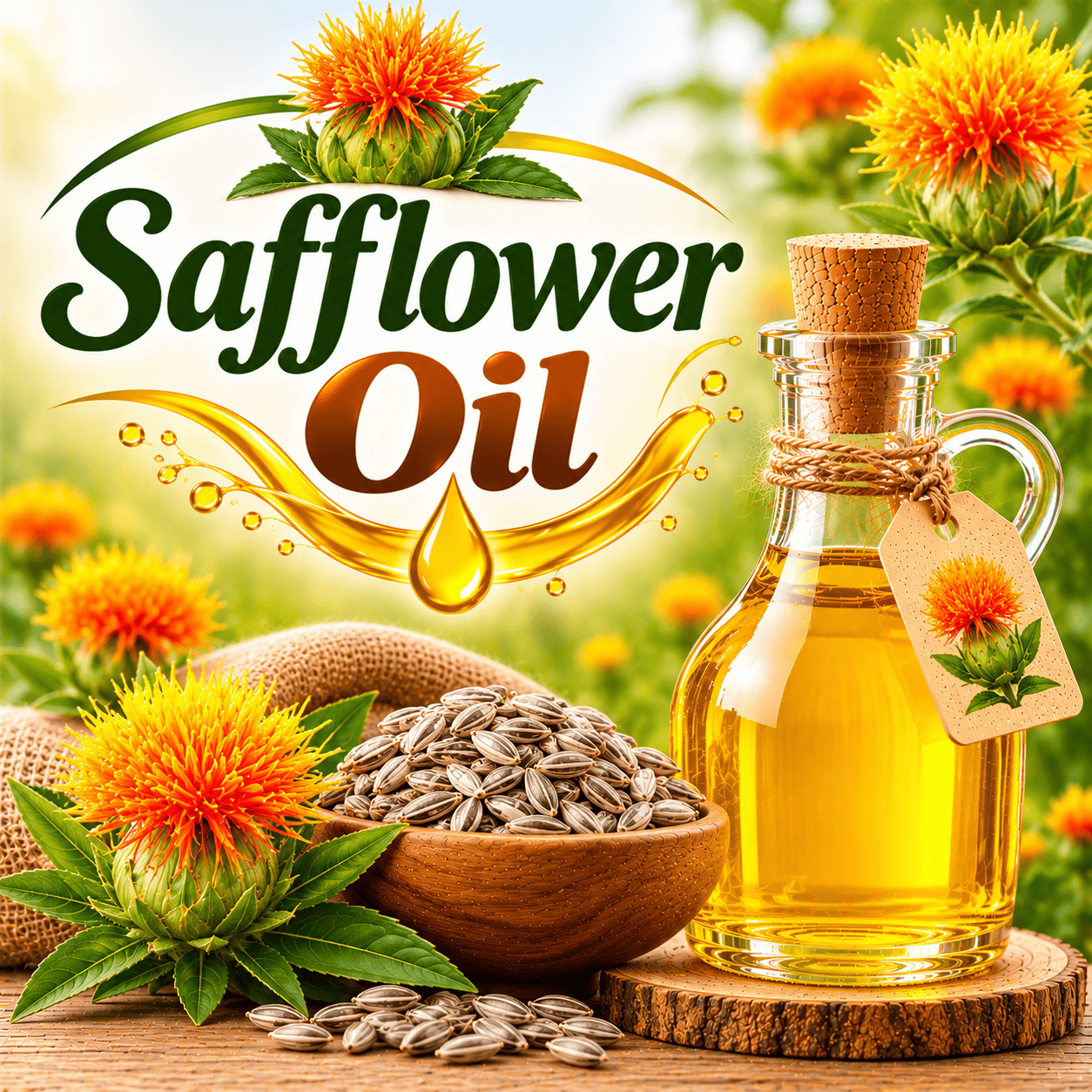
Safflower Oil
Safflower Oil is a natural vegetable oil extracted from the seeds of the safflower plant (Carthamus tinctorius). Also known as Kusum Oil, it is widely used in the food processing industry, cooking, cosmetics, skincare products, and various industrial applications.
Safflower Oil is valued for its light texture, mild flavour, and unsaturated fatty acid composition. Depending on the safflower variety and processing method, the oil may contain high levels of linoleic acid or oleic acid, making it a versatile ingredient for different formulations.
What Is Safflower Oil?
Safflower Oil is a fixed vegetable oil obtained from the seeds of the safflower plant, a flowering crop belonging to the Asteraceae family.
It is generally light yellow to golden in colour and has a mild, neutral aroma. The oil is available in cold-pressed, expeller-pressed, and refined grades.
Safflower Oil is commonly used in cooking oils, salad dressings, skincare formulations, massage oils, soaps, and specialty industrial products.
Botanical Information
- Common Name: Safflower Oil / Kusum Oil
- Botanical Name: Carthamus tinctorius
- Family: Asteraceae
- Part Used: Seeds
- Oil Type: Fixed Vegetable Oil
- Extraction Method: Cold Pressing, Expeller Pressing or Solvent Extraction
- Appearance: Light Yellow to Golden Liquid
- Aroma: Mild and Characteristic
- Major Fatty Acids: Linoleic Acid and Oleic Acid
Extraction Process of Safflower Oil
Safflower Oil is produced through a series of processing steps designed to obtain quality oil from the seeds.
1. Seed Selection and Cleaning
High-quality safflower seeds are selected and cleaned to remove dust, stones, and other unwanted materials.
2. Seed Preparation
The seeds are prepared through suitable cleaning, conditioning, and dehulling processes, depending on the extraction method.
3. Oil Extraction
The prepared seeds are processed using mechanical pressing, cold pressing, expeller pressing, or solvent extraction.
4. Filtration
The extracted crude oil is filtered to remove suspended particles and seed residues.
5. Refining
Depending on the intended application, the oil may undergo degumming, neutralisation, bleaching, and deodorisation.
6. Quality Testing and Packaging
The finished oil is tested against relevant quality specifications and packed in suitable containers.
Uses and Applications of Safflower Oil
Safflower Oil is used across several industries because of its fatty acid composition, light texture, and versatility.
1. Food Processing Industry
Food-grade Safflower Oil is used in cooking oils, salad dressings, sauces, mayonnaise, and processed food products.
2. Cooking and Frying
Refined Safflower Oil is used for sautéing, frying, and general cooking applications. Its suitability depends on the fatty acid profile and processing grade.
3. Skincare Products
Safflower Oil is incorporated into creams, lotions, moisturisers, facial oils, and body care products. It works as an emollient and helps provide a smooth skin feel.
4. Hair Care Products
It is used in hair oils, conditioners, hair masks, and other hair care formulations.
5. Cosmetic and Personal Care Industry
Safflower Oil is included in massage oils, body oils, cleansing products, soaps, and cosmetic blends.
6. Soap Manufacturing
It can be used as a vegetable oil ingredient in handmade soaps and cleansing bars, depending on the desired formulation properties.
7. Industrial Applications
Selected grades and derivatives of Safflower Oil may be used in specialty coatings, paints, lubricants, and other oleochemical formulations.
Key Characteristics of Safflower Oil
- Extracted from the seeds of the safflower plant.
- Contains naturally occurring unsaturated fatty acids.
- Available in high-linoleic and high-oleic varieties.
- Has a light texture and mild aroma.
- Available in cold-pressed and refined grades.
- Used in food, cosmetic, and industrial applications.
- Suitable for different product formulations depending on its grade.
Fatty Acid Composition of Safflower Oil
The fatty acid composition of Safflower Oil varies according to the seed variety.
Major Fatty Acids
- Linoleic Acid (Omega-6): A major polyunsaturated fatty acid, particularly in high-linoleic varieties.
- Oleic Acid (Omega-9): A monounsaturated fatty acid that is predominant in high-oleic varieties.
- Palmitic Acid: A naturally occurring saturated fatty acid.
- Stearic Acid: Another naturally occurring saturated fatty acid.
- Linolenic Acid: May be present in relatively small quantities.
The exact fatty acid profile depends on the safflower cultivar, growing conditions, seed quality, and processing method.
Quality Parameters of Safflower Oil
The quality of Safflower Oil is evaluated through several physical and chemical parameters.
- Appearance and Colour
- Odour and Flavour
- Acid Value
- Free Fatty Acid (FFA)
- Peroxide Value
- Iodine Value
- Saponification Value
- Moisture and Volatile Matter
- Unsaponifiable Matter
- Fatty Acid Profile
Commercial buyers and manufacturers should review the Certificate of Analysis (COA), Technical Data Sheet (TDS), and applicable safety documentation.
Storage and Handling
Proper storage helps maintain the quality and stability of Safflower Oil.
- Store in clean and tightly sealed containers.
- Keep away from direct sunlight and excessive heat.
- Use cool and dry storage conditions.
- Minimise exposure to air and moisture.
- Use suitable food-grade or cosmetic-grade packaging.
- Follow the manufacturer’s recommended shelf life and storage instructions.
High-linoleic Safflower Oil can be more susceptible to oxidation, so proper storage is particularly important.
Safety and Precautions
Only food-grade Safflower Oil should be used in edible products. Cosmetic and industrial grades are not intended for consumption.
Manufacturers should check the product specifications and conduct compatibility testing before using the oil in new formulations. People with known sensitivities should review the ingredient information before use.
Frequently Asked Questions (FAQs)
1. What is Safflower Oil?
Safflower Oil is a natural fixed vegetable oil extracted from the seeds of the safflower plant, botanically known as Carthamus tinctorius.
2. What is the common name of Safflower Oil?
Safflower Oil is also commonly known as Kusum Oil.
3. What is Safflower Oil used for?
It is used in cooking oils, food processing, salad dressings, skincare products, hair care formulations, cosmetics, and industrial applications.
4. Which fatty acids are present in Safflower Oil?
It contains oleic acid, linoleic acid, palmitic acid, and stearic acid. Their proportions vary according to the safflower variety.
5. How is Safflower Oil extracted?
It is extracted from safflower seeds using cold pressing, expeller pressing, or solvent extraction, followed by filtration and optional refining.
6. Is Safflower Oil used in cosmetics?
Yes, cosmetic-grade Safflower Oil is used in creams, lotions, massage oils, facial oils, and personal care products.
7. What is the difference between high-oleic and high-linoleic Safflower Oil?
High-oleic Safflower Oil contains a greater proportion of oleic acid, while high-linoleic Safflower Oil contains a greater proportion of linoleic acid.
8. How should Safflower Oil be stored?
It should be stored in tightly sealed containers in a cool, dry place, away from direct sunlight, air, and excessive heat.
Conclusion
Safflower Oil is a versatile vegetable oil valued for its light texture, mild aroma, and useful fatty acid composition. Its availability in high-oleic and high-linoleic varieties makes it suitable for a wide range of food, cosmetic, personal care, and industrial applications.
Selecting the right grade, extraction method, and quality specifications is essential for achieving the desired results in different manufacturing processes.