
Galangal Oil
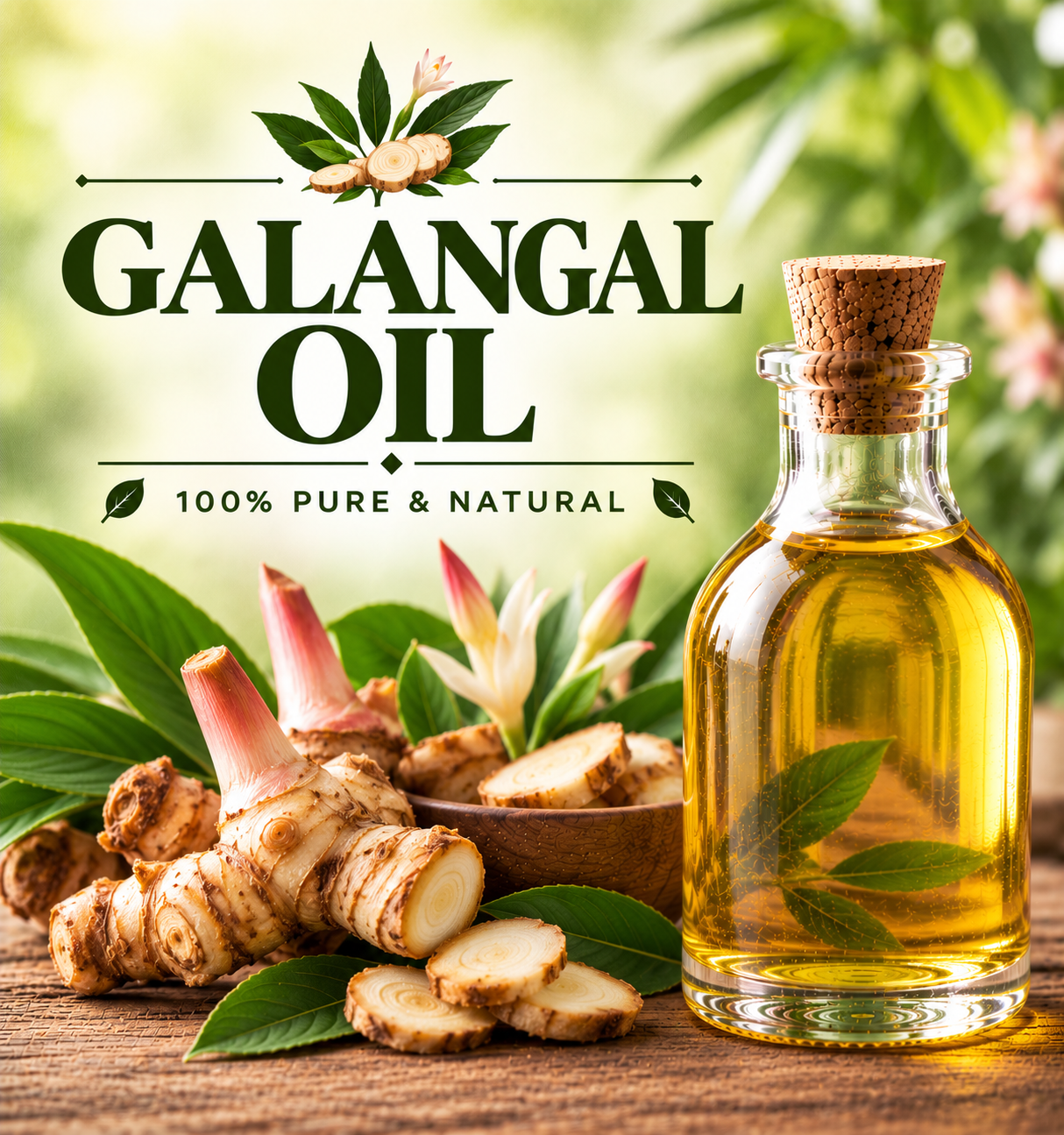
Galangal Oil
Galangal Oil is a natural aromatic oil obtained from galangal rhizomes and valued for its warm, spicy, fresh and slightly citrusy aroma. It is commonly used in flavouring, fragrance, personal care, cosmetics, aromatherapy and botanical formulations.
Galangal belongs to the ginger family and is closely related to other aromatic rhizomes such as ginger and turmeric. Depending on the botanical species and commercial specification, Galangal Oil can offer a distinctive spicy and refreshing aromatic profile.
What is Galangal Oil?
Galangal Oil is an aromatic essential oil obtained from the rhizomes of galangal plants. The term “galangal” can refer to more than one Alpinia species, so the exact botanical source should always be confirmed according to the product specification.
One commonly used source is Alpinia galanga, also known as greater galangal.
The oil is appreciated for its characteristic warm, spicy, fresh, woody and slightly citrus-like aroma and is used in a variety of commercial formulations.
Botanical Information of Galangal Oil
- Common Name: Galangal Oil
- Botanical Source: Commonly Alpinia galanga; species may vary by specification
- Family: Zingiberaceae
- Plant Part: Rhizomes
- Extraction Method: Commonly steam distillation
- Appearance: Clear to pale yellow or yellowish liquid
- Aroma: Warm, spicy, fresh, woody and slightly citrusy
- Product Type: Natural Essential Oil
How is Galangal Oil Extracted?
Galangal Oil is commonly obtained through steam distillation of galangal rhizomes.
The rhizomes are cleaned and prepared before being exposed to steam. The steam carries the volatile aromatic constituents from the plant material into a condenser, where the vapour is cooled and collected. The essential oil is then separated from the condensed water.
The final characteristics of Galangal Oil can vary according to species, geographical origin, rhizome quality, harvesting conditions, processing and distillation parameters.
Galangal Oil Uses & Applications
1. Food & Flavour Industry
Where an appropriate food-grade specification is available, Galangal Oil can be used as a flavouring ingredient to provide a warm, spicy and characteristic galangal note.
It may be relevant to selected:
- Food flavour formulations
- Beverage flavour systems
- Spice blends
- Sauces and seasoning products
- Culinary flavour preparations
Only oil specifically manufactured and approved for food use should be used in food applications.
2. Perfumery & Fragrance
Galangal Oil provides a distinctive warm, spicy and fresh aromatic note that can be incorporated into selected fragrance compositions.
It can be used in fragrance blends where a spicy botanical character is desired.
3. Cosmetics & Personal Care
Galangal Oil can be used as an aromatic botanical ingredient in selected cosmetic and personal care formulations.
Potential applications include:
- Creams and lotions
- Body care products
- Massage oils
- Botanical cosmetic formulations
- Aromatic personal care products
4. Soap & Bath Products
Its warm and spicy fragrance profile makes Galangal Oil suitable for selected soaps, shower products and bath formulations.
5. Aromatherapy & Essential Oil Blends
Galangal Oil is used in aromatic blends where its spicy, fresh and slightly citrusy fragrance can complement other essential oils.
6. Home Fragrance
Galangal Oil may be incorporated into selected candles, diffusers, room fragrance products and other aromatic formulations.
7. Botanical Formulations
Its natural aromatic profile makes Galangal Oil useful in botanical and natural-product formulations where a distinctive spicy fragrance is required.
Galangal Oil Benefits for Formulations
Galangal Oil is valued by formulators for its characteristic aromatic properties, including:
- Warm and spicy fragrance
- Fresh and slightly citrusy aromatic character
- Distinctive botanical profile
- Useful in flavour applications when food-grade
- Suitable for fragrance blending
- Useful in soaps and bath products
- Suitable for selected cosmetic formulations
- Compatible with various natural aromatic ingredients
These benefits refer mainly to its formulation and aromatic characteristics. Actual product performance depends on the formulation, concentration and quality of the oil.
Key Characteristics of Galangal Oil
| Property | Description |
|---|---|
| Common Name | Galangal Oil |
| Botanical Source | Commonly Alpinia galanga |
| Family | Zingiberaceae |
| Plant Part | Rhizomes |
| Extraction | Steam distillation |
| Appearance | Clear to pale yellow/yellowish |
| Aroma | Warm, spicy, fresh, woody, slightly citrusy |
| Type | Essential Oil |
| Main Applications | Food flavour, fragrance, cosmetics, personal care, soaps and aromatherapy |
Major Components of Galangal Oil
The chemical composition of Galangal Oil can vary significantly according to the species, geographical origin, rhizome maturity, processing and extraction conditions.
Depending on the botanical source and specification, Galangal Oil may contain naturally occurring volatile compounds such as:
- 1,8-Cineole
- α-Pinene
- β-Pinene
- Camphene
- Limonene
- Methyl cinnamate and related aromatic compounds
- Other naturally occurring terpenes and volatile constituents
The exact composition should not be assumed from the botanical name alone. For commercial applications, the supplier’s COA, TDS and GC-MS report should be checked for the specific batch.
Galangal Oil for Different Industries
Food & Flavour Industry
Food-grade Galangal Oil can be used as a concentrated flavouring ingredient in suitable formulations.
Cosmetic Industry
Galangal Oil can provide a natural aromatic component to selected cosmetic and personal care products.
Perfume Industry
Its warm, spicy and fresh aroma can contribute a distinctive botanical note to fragrance compositions.
Soap & Personal Care Industry
It can be used in soaps, bath products, body care products and other aromatic personal care formulations.
Aromatherapy Industry
Galangal Oil can be included in essential oil blends and other aromatic applications according to formulation requirements.
Galangal Oil vs Ginger Oil
Galangal Oil and Ginger Oil both belong to the Zingiberaceae family and are obtained from rhizomes, but they come from different plants and have distinct aromatic profiles.
- Galangal Oil: Commonly associated with Alpinia galanga; warm, spicy, fresh and slightly citrusy.
- Ginger Oil: Commonly obtained from Zingiber officinale; warm, spicy, fresh and characteristic ginger-like.
The choice depends on the desired aroma, flavour profile and formulation requirements.
Galangal Oil vs Turmeric Oil
Both Galangal Oil and Turmeric Oil are obtained from aromatic rhizomes belonging to the Zingiberaceae family.
- Galangal Oil: Commonly Alpinia galanga; sharper, spicy and fresh aromatic profile.
- Turmeric Oil: Commonly Curcuma longa; warmer, earthy and characteristic turmeric-like profile.
They should not be considered interchangeable ingredients.
Why Choose High-Quality Galangal Oil?
For commercial use, quality and consistency are important. A reliable Galangal Oil should ideally have:
- Clearly identified botanical source
- Consistent aroma and appearance
- Appropriate quality specifications
- Suitable packaging
- Batch-wise quality documentation
- COA/TDS/SDS where applicable
- GC-MS information when required
- Proper traceability
For food, pharmaceutical or other regulated applications, always select the grade specifically manufactured and approved for that purpose.
Storage & Handling of Galangal Oil
To maintain the quality of Galangal Oil:
- Store in a tightly closed container.
- Keep away from direct sunlight.
- Protect from excessive heat.
- Store in a cool and dry environment.
- Minimize unnecessary exposure to air.
- Keep away from moisture and contamination.
- Follow the supplier’s storage recommendations and SDS.
Proper storage helps maintain the oil’s aromatic quality and overall stability.
Safety & Handling
Galangal Oil is a concentrated aromatic oil and should be handled according to its intended application.
- Do not normally apply concentrated essential oil directly to the skin without appropriate dilution.
- Avoid contact with eyes and sensitive areas.
- Conduct suitable compatibility or patch testing for topical formulations.
- Keep away from children and pets.
- Do not ingest unless the product is specifically manufactured, tested and approved for an ingestible application.
- For food applications, use only an appropriate food-grade specification.
- Always follow the supplier’s SDS and recommended usage levels.
Frequently Asked Questions About Galangal Oil
What is Galangal Oil?
Galangal Oil is a natural aromatic essential oil commonly obtained from galangal rhizomes through steam distillation.
What is the botanical name of Galangal Oil?
Galangal Oil can refer to oils from different galangal species. One common source is Alpinia galanga, or greater galangal. The exact botanical source should be confirmed from the product specification.
How is Galangal Oil extracted?
Galangal Oil is commonly extracted from galangal rhizomes using steam distillation.
What does Galangal Oil smell like?
Galangal Oil generally has a warm, spicy, fresh, woody and slightly citrusy aroma.
What is Galangal Oil used for?
Galangal Oil is used in flavouring, fragrance, cosmetics, personal care, soaps, bath products, aromatherapy and botanical formulations, depending on grade and specification.
Can Galangal Oil be used in food?
A specifically manufactured and approved food-grade Galangal Oil may be used in suitable food flavour applications. Cosmetic or industrial-grade oil should not automatically be considered suitable for food.
Is Galangal Oil the same as Ginger Oil?
No. They come from different botanical sources and have different chemical and aromatic profiles, although both belong to the Zingiberaceae family.
Can Galangal Oil be used in cosmetics?
Yes, Galangal Oil can be used as an aromatic ingredient in suitable cosmetic and personal care formulations when used according to the applicable formulation and safety requirements.
Can Galangal Oil be used in soap?
Yes. Its warm and spicy aroma makes it suitable for selected soap and bath product formulations.
How should Galangal Oil be stored?
It should generally be stored in a tightly sealed container in a cool, dry and dark environment away from direct sunlight and excessive heat.
Is Galangal Oil the same as Turmeric Oil?
No. Galangal Oil and Turmeric Oil come from different plants, although both are members of the Zingiberaceae family.
Conclusion
Galangal Oil is a versatile natural aromatic oil valued for its warm, spicy, fresh and slightly citrusy fragrance. Commonly obtained from galangal rhizomes, it has applications across food flavouring, perfumery, cosmetics, personal care, soaps, aromatherapy and botanical formulations.
For commercial applications, selecting Galangal Oil with a clearly identified botanical source, consistent quality and appropriate technical documentation helps support better formulation and quality control.