
Avocado Oil
Avocado Oil
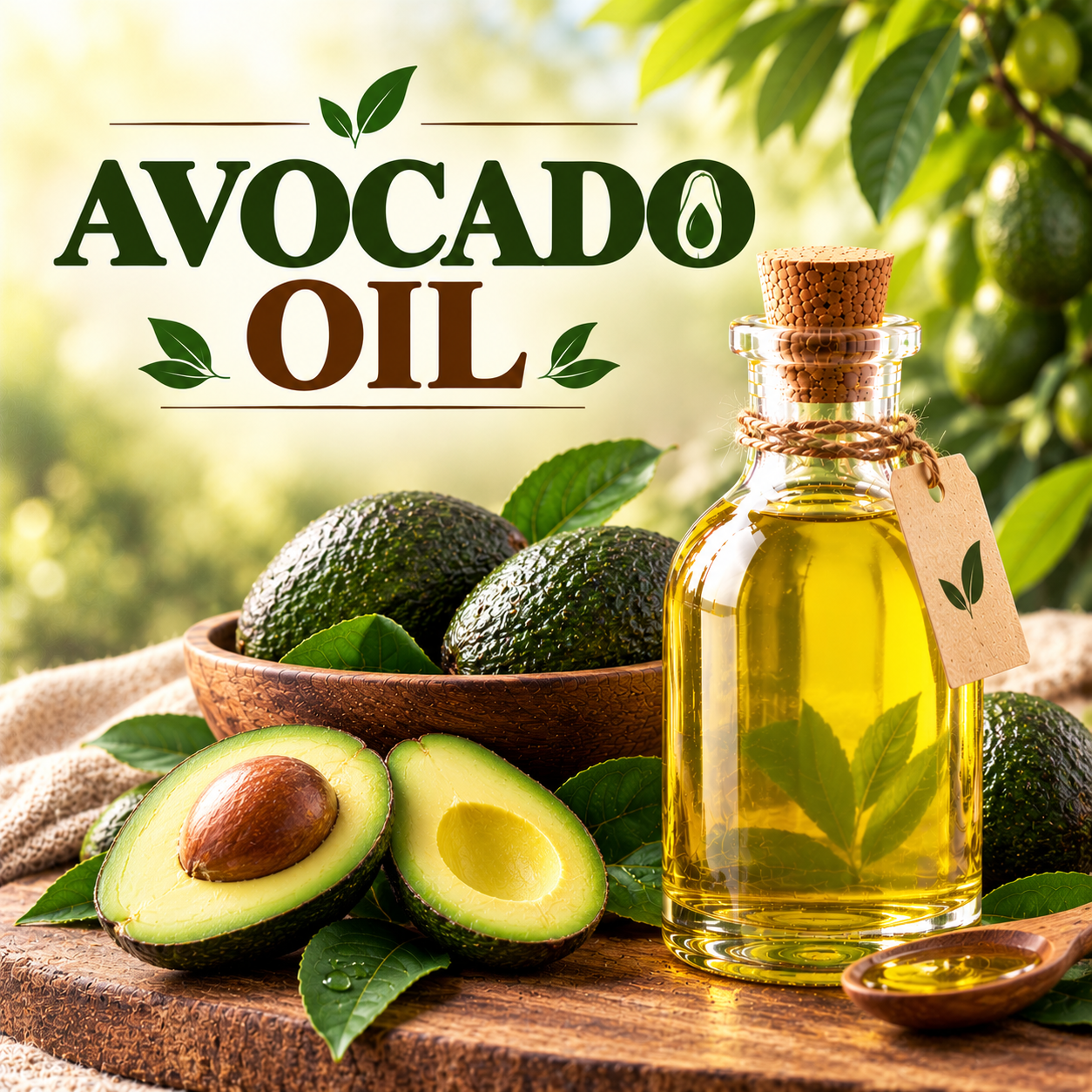
Avocado Oil is a versatile plant-based oil widely used in skincare, hair care, cosmetics, personal care products, massage oils and selected food applications. It is obtained from the pulp of the avocado fruit and is valued for its smooth texture, fatty acid profile and formulation flexibility.
Due to its emollient properties, Avocado Oil is a useful ingredient for manufacturers developing moisturizers, creams, lotions, hair conditioners, massage blends and other personal care products. Its suitability for a specific application depends on the oil grade, processing method and product specifications.
What Is Avocado Oil?
Avocado Oil is a fixed vegetable oil extracted from the fleshy pulp of the avocado fruit. The botanical name of the commonly used avocado species is Persea americana, which belongs to the Lauraceae family.
Unlike essential oils, Avocado Oil is a non-volatile oil containing triglycerides and fatty acids. It is available in different commercial grades, including refined oil and unrefined or virgin oil. Depending on the processing method, its colour, aroma and other physical characteristics may vary.
Avocado Oil is used in cosmetic, personal care and food formulations when supplied in the appropriate grade.
Botanical Information of Avocado Oil
- Common Name: Avocado Oil
- Botanical Name: Persea americana
- Plant Family: Lauraceae
- Plant Source: Pulp or flesh of the avocado fruit
- Oil Type: Fixed vegetable oil
- Extraction Methods: Mechanical pressing and other suitable oil extraction processes
- Appearance: Usually greenish to yellow, depending on grade and processing
- Commercial Forms: Refined, virgin and other specification-based grades
The exact characteristics of Avocado Oil depend on the fruit variety, growing conditions, extraction method, refining process and storage conditions.
How Is Avocado Oil Extracted?
Avocado Oil is produced from the fleshy pulp of mature avocado fruits. The fruit is prepared and processed to separate the oil from its water and solid components.
1. Fruit Selection and Preparation
Suitable avocado fruits are selected and prepared for processing. The pulp is separated from the peel and seed.
2. Pulp Processing
The pulp is processed using an appropriate method to release the oil. Commercial production may involve mechanical extraction or other controlled techniques.
3. Oil Separation
The released oil is separated from water and remaining fruit solids. Filtration or additional processing may be used to improve clarity.
4. Refining and Quality Control
Depending on the intended grade, the oil may be refined to modify its colour, odour or other characteristics. Quality checks help assess its suitability for cosmetic, personal care or food applications.
Key Characteristics of Avocado Oil
Avocado Oil is appreciated by formulators for its emollient nature and compatibility with many oil-based product systems.
- Emollient Properties: Helps soften and condition the skin.
- Fatty Acid Profile: Generally contains oleic acid, along with linoleic, palmitic and other fatty acids.
- Formulation Flexibility: Can be incorporated into suitable oil-based cosmetic and personal care products.
- Texture: Provides an oil-rich feel that may contribute to the sensory properties of a formulation.
- Natural Origin: Derived from avocado fruit pulp.
- Grade Options: Refined and unrefined grades can serve different formulation requirements.
The fatty acid composition and minor components, including naturally occurring tocopherols and other unsaponifiable substances, vary according to the source and processing method.
Uses and Applications of Avocado Oil
1. Skincare Products
Avocado Oil is used in skincare formulations because it helps soften the skin and contributes to the emollient properties of a finished product.
Common applications include:
- Moisturizing creams
- Body lotions
- Face creams
- Body oils
- Hand creams
- Skin-conditioning products
Formulators select the suitable grade and concentration according to the desired texture, stability and skin feel.
2. Hair Care Products
Avocado Oil is used in hair care products to condition the hair and improve the feel of oil-based formulations.
It may be incorporated into:
- Hair oils
- Hair masks
- Conditioners
- Hair creams
- Leave-on hair products
- Scalp-care cosmetic formulations
The final product should be designed according to the intended use, compatibility and consumer requirements.
3. Cosmetic Formulations
Avocado Oil is a useful ingredient in various cosmetic products where an emollient oil is required.
Examples include:
- Makeup-removing oils
- Cleansing balms
- Lip-care products
- Body butters
- Cosmetic creams
- Skin-conditioning blends
Its colour, odour and oxidation stability should be considered when developing the finished formulation.
4. Massage Oils
Avocado Oil can be included in massage oil blends and body oils. Its suitability depends on the desired viscosity, spreadability, skin feel and compatibility with other ingredients.
It may be blended with other suitable carrier oils to achieve the required sensory properties.
5. Soaps and Personal Care Products
Avocado Oil can be used in selected soap and personal care formulations. In soapmaking, the oil’s fatty acid profile affects the hardness, lather characteristics and conditioning properties of the finished soap.
Potential applications include:
- Handmade soaps
- Cleansing bars
- Body-care products
- Oil-based cleansing formulations
- Selected bath and body products
The formulation should be tested to confirm stability, performance and product quality.
6. Food Applications
Food-grade Avocado Oil may be used in appropriate culinary applications, depending on its specification and applicable food regulations.
Possible uses include salad dressings, sauces and cooking applications suitable for the oil’s grade and heat stability.
Important: Cosmetic-grade Avocado Oil should not automatically be considered suitable for eating. Food applications require a verified food-grade product that meets the relevant safety and regulatory requirements.
Avocado Oil in Natural and Plant-Based Formulations
Avocado Oil is often selected for formulations that use plant-derived oils. It can be combined with compatible ingredients to create different textures and product characteristics.
For example, a cosmetic formulation may combine Avocado Oil with other carrier oils, waxes, emulsifiers and skin-conditioning ingredients. The correct combination depends on the product type and its required stability.
When developing a commercial product, manufacturers should evaluate:
- Ingredient compatibility
- Oxidation stability
- Colour and odour
- Viscosity and skin feel
- Packaging compatibility
- Microbial stability of the finished formulation
- Applicable cosmetic or food regulations
Natural origin alone does not guarantee that an ingredient or finished product is suitable for every skin type or application.
Avocado Oil vs. Olive Oil
Avocado Oil and Olive Oil are both fixed vegetable oils, but they differ in source, sensory properties and typical formulation preferences.
| Feature | Avocado Oil | Olive Oil |
|---|---|---|
| Botanical source | Persea americana | Olea europaea |
| Plant part | Fruit pulp | Fruit |
| Oil type | Fixed vegetable oil | Fixed vegetable oil |
| Common cosmetic uses | Creams, lotions, hair care and body oils | Soaps, creams, lotions and personal care |
| Fatty acid profile | Generally rich in oleic acid | Generally rich in oleic acid |
| Appearance | Greenish to yellow, depending on grade | Golden yellow to green, depending on grade |
| Selection factors | Grade, colour, odour and formulation needs | Grade, aroma, colour and formulation needs |
Neither oil is universally better for every application. The best choice depends on the formulation, specifications and desired finished-product properties.
Quality Considerations When Buying Avocado Oil
Choosing the correct Avocado Oil grade is important for product manufacturers, cosmetic formulators and ingredient buyers.
Before purchasing, consider the following points:
- Botanical Identity: Confirm that the product is derived from Persea americana.
- Grade: Select cosmetic, personal care or food grade according to the intended application.
- Extraction Method: Check whether the oil is refined, virgin, mechanically pressed or processed using another method.
- Certificate of Analysis (COA): Review the batch-specific quality parameters.
- Technical Data Sheet (TDS): Check the recommended applications and physical characteristics.
- Safety Data Sheet (SDS): Review relevant handling and storage guidance.
- Oxidation and Stability: Consider the supplier’s quality parameters and shelf-life recommendations.
- Traceability: Prefer suppliers who can provide batch information and appropriate documentation.
For commercial production, verify the product specification and regulatory suitability before using the oil in a finished formulation.
Storage and Handling of Avocado Oil
Correct storage helps maintain the quality of Avocado Oil throughout its intended shelf life.
- Store in a tightly closed container.
- Keep away from direct sunlight and excessive heat.
- Minimize unnecessary exposure to air.
- Use clean, dry equipment when handling the oil.
- Follow the supplier’s recommended storage temperature.
- Check the product’s odour, colour and specifications before use.
- Follow the manufacturer’s stated shelf life and batch documentation.
The oil’s stability depends on its grade, processing method, packaging and storage conditions.
Safety and Precautions
Avocado Oil is commonly used as an ingredient in cosmetic and personal care products, but the finished formulation and intended use should always be considered.
- Conduct a suitable compatibility or patch test before wider topical use.
- Avoid using oil that shows unusual odour, appearance or signs of deterioration.
- Use only the appropriate grade for the intended application.
- For food use, select verified food-grade oil and follow relevant regulations.
- People with known avocado allergy or a history of reactions should seek appropriate professional advice before use.
- Follow the supplier’s handling instructions and product documentation.
Avocado Oil is a cosmetic or formulation ingredient, not a substitute for medical treatment.
Frequently Asked Questions About Avocado Oil
1. What is Avocado Oil?
Avocado Oil is a fixed vegetable oil obtained from the pulp of the avocado fruit, commonly identified botanically as Persea americana.
2. What is Avocado Oil used for?
It is used in skincare, hair care, cosmetics, massage oils, soaps and selected personal care formulations. Food-grade varieties may also be used in suitable culinary applications.
3. Is Avocado Oil suitable for skincare products?
Yes, suitable cosmetic grades are commonly incorporated into creams, lotions, body oils and other skin-conditioning formulations. The final product should be assessed for compatibility and safety.
4. Can Avocado Oil be used in hair care products?
Yes, it can be used in hair oils, conditioners, hair masks and other hair-conditioning formulations, depending on the product design.
5. What is the botanical name of Avocado Oil?
The botanical name commonly associated with Avocado Oil is Persea americana.
6. Is Avocado Oil a carrier oil or an essential oil?
Avocado Oil is a fixed vegetable oil, often used as a carrier or emollient oil. It is not an essential oil.
7. What fatty acids are present in Avocado Oil?
Its fatty acid profile generally includes oleic acid, linoleic acid, palmitic acid and other fatty acids. Exact levels vary by fruit source and processing.
8. Can Avocado Oil be used in food products?
Only when the oil is supplied as a suitable food-grade product and complies with applicable food safety requirements. Cosmetic-grade oil should not be assumed to be edible.
9. How should Avocado Oil be stored?
Store it in a tightly closed container away from direct sunlight, excessive heat and unnecessary exposure to air. Follow the supplier’s storage recommendations.
10. What documents should buyers request when purchasing Avocado Oil?
Buyers should review the Certificate of Analysis (COA), Technical Data Sheet (TDS), Safety Data Sheet (SDS), product grade, batch details and any relevant regulatory documentation.
Conclusion
Avocado Oil is a versatile fixed vegetable oil used in skincare, hair care, cosmetics, massage oils, soaps and other personal care products. Its emollient properties and fatty acid profile make it a useful ingredient for a wide range of formulations.
For the best results, manufacturers and buyers should select the appropriate grade, review the product specifications and follow recommended storage and handling practices. Choosing a reliable supplier with suitable quality documentation helps ensure that Avocado Oil meets the requirements of the intended application.