
Moringa Oil
Moringa Oil
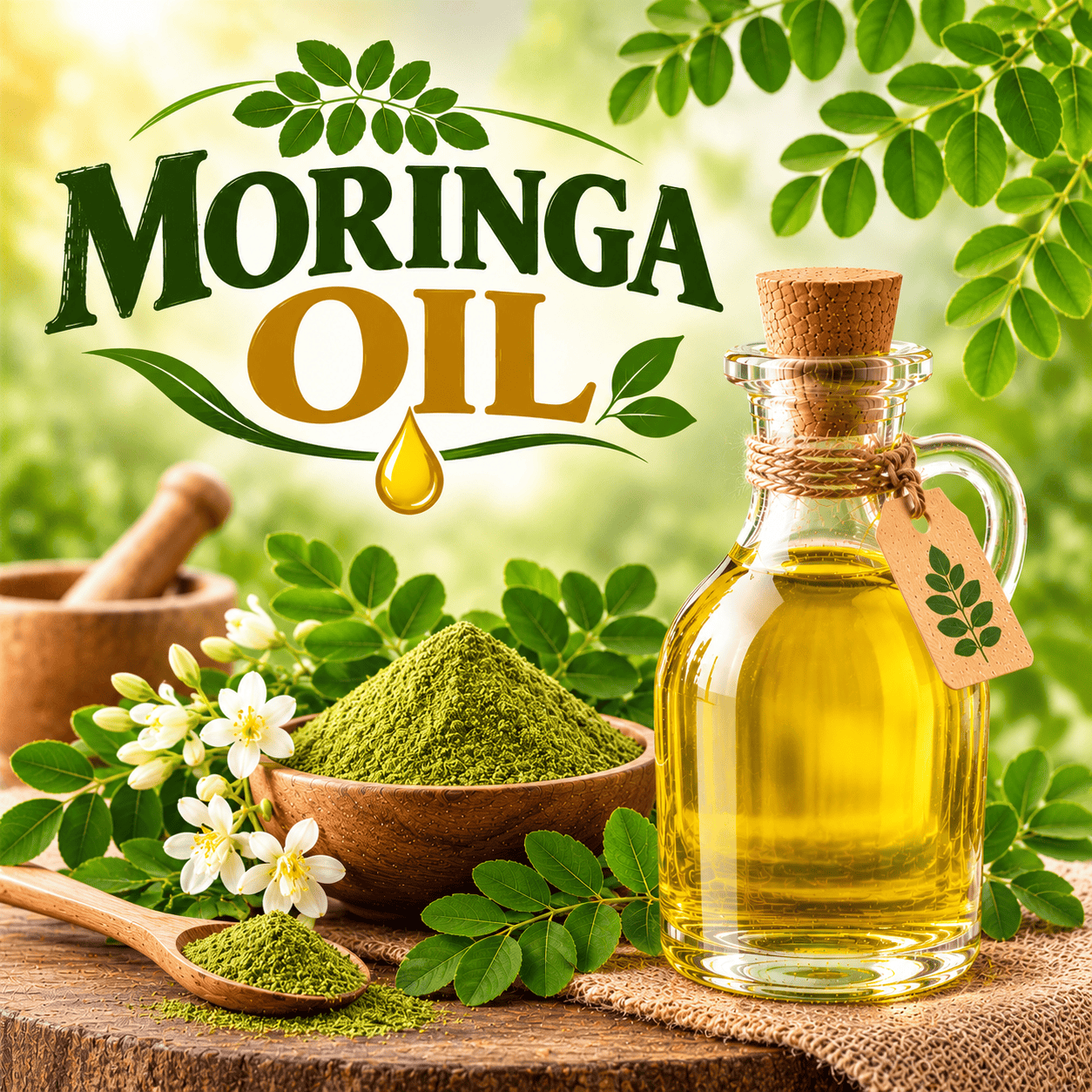
Moringa Oil is a natural plant-based oil extracted from the seeds of the Moringa tree. Also known as Ben Oil, it is valued for its lightweight texture, stability, moisturizing properties and versatility in cosmetic, skincare, haircare and personal care formulations.
Rich in oleic acid and other naturally occurring fatty acids, Moringa Oil is widely used in premium beauty products, massage oils, creams, lotions and specialty formulations. Its smooth texture and good oxidative stability make it a popular ingredient in the cosmetic and personal care industries.
What Is Moringa Oil?
Moringa Oil is a vegetable-based fixed oil obtained from the seeds of the Moringa tree. The most commonly used botanical source is Moringa oleifera, a plant native to parts of South Asia and widely cultivated in tropical and subtropical regions.
The oil is also traditionally called Ben Oil because of its historical association with ben oil, which was used in perfumery and traditional applications.
Moringa Oil is generally pale yellow to golden in colour, with a mild characteristic odour. Its composition and appearance may vary depending on the seed quality, extraction method and refining process.
Botanical Information
- Common Name: Moringa Oil
- Botanical Name: Moringa oleifera
- Family: Moringaceae
- Plant Part Used: Seeds
- Oil Type: Fixed Vegetable Oil
- Extraction Method: Cold Pressing or Mechanical Extraction
- Colour: Pale Yellow to Golden Yellow
- Texture: Smooth and Lightweight
- Main Fatty Acid: Oleic Acid
Extraction Process of Moringa Oil
Moringa Oil is commonly produced through mechanical extraction or cold pressing. The process generally involves the following steps:
- Seed Collection: Mature Moringa seeds are collected from dried pods.
- Cleaning: Seeds are cleaned to remove dust, dirt and other impurities.
- Dehulling: Seed shells may be removed to prepare the kernels for extraction.
- Oil Extraction: Oil is extracted using a mechanical press. Cold pressing helps retain the oil’s natural characteristics.
- Filtration: The extracted oil is filtered to remove suspended particles.
- Storage and Packaging: The finished oil is packed in suitable containers to maintain its quality and stability.
Uses and Applications of Moringa Oil
Moringa Oil is used across several industries because of its smooth texture, moisturizing characteristics and versatile formulation properties.
1. Skincare Products
Moringa Oil is commonly incorporated into skincare formulations such as facial oils, moisturizers, creams and body lotions. It helps condition the skin and supports a soft, smooth skin feel.
2. Hair Care Products
It is used in hair oils, conditioners, hair masks and serums. Its emollient properties make it useful for conditioning dry hair and improving manageability.
3. Cosmetic Formulations
Moringa Oil is a useful ingredient in lip balms, massage oils, body butters, cleansing oils and other cosmetic products.
4. Massage Oils
Its smooth consistency and skin-conditioning properties make it suitable for massage oil blends and body care formulations.
5. Soap Manufacturing
Moringa Oil can be used in soap formulations as part of the vegetable oil blend. The final soap characteristics depend on the overall formulation and the proportion of oils used.
6. Personal Care Products
It is used in a variety of personal care products, including body creams, hand creams, hair conditioners and moisturizing products.
7. Food Applications
Food-grade Moringa Oil may be used in certain culinary and food-related applications. Only oil specifically processed and certified for food use should be considered edible. Cosmetic or industrial grades must not be used in food.
Key Characteristics of Moringa Oil
- Plant-derived fixed vegetable oil.
- Naturally rich in oleic acid.
- Smooth texture and good spreading properties.
- Suitable for skincare and haircare formulations.
- Used in creams, lotions, massage oils and cosmetics.
- Good oxidative stability compared with many highly unsaturated vegetable oils.
- Available in cold-pressed, refined and other commercial grades.
Quality Parameters of Moringa Oil
The quality of Moringa Oil can be evaluated through various technical parameters, including:
- Appearance: Clear oil with no visible foreign matter.
- Colour: Pale yellow to golden yellow, depending on grade.
- Odour: Mild characteristic odour.
- Acid Value: Indicates the level of free fatty acids.
- Peroxide Value: Helps assess primary oxidation.
- Iodine Value: Indicates the degree of unsaturation.
- Fatty Acid Profile: Helps verify the oil’s composition.
- Moisture and Impurities: Important for product quality and storage stability.
For commercial purchasing, buyers should request a Certificate of Analysis (COA), Technical Data Sheet (TDS) and Safety Data Sheet (SDS), where applicable.
Storage and Handling
To maintain the quality of Moringa Oil:
- Store in a cool, dry place.
- Keep away from direct sunlight and excessive heat.
- Use tightly sealed containers.
- Avoid contact with water and contaminants.
- Prefer suitable, well-sealed packaging for long-term storage.
- Follow the supplier’s recommended storage conditions and shelf life.
Frequently Asked Questions (FAQs)
1. What is Moringa Oil?
Moringa Oil is a natural fixed vegetable oil extracted from the seeds of the Moringa tree, mainly Moringa oleifera.
2. What is another name for Moringa Oil?
Moringa Oil is also commonly known as Ben Oil.
3. How is Moringa Oil extracted?
It is generally extracted from Moringa seeds through cold pressing or mechanical oil extraction.
4. Is Moringa Oil good for skin?
Moringa Oil is used in skincare products because of its emollient and skin-conditioning properties. Its suitability depends on the formulation and individual skin compatibility.
5. Can Moringa Oil be used for hair?
Yes. It is commonly used in hair oils, conditioners, masks and serums to condition hair and improve manageability.
6. Is Moringa Oil suitable for cosmetic products?
Yes. It is used in facial oils, creams, lotions, massage oils, soaps and other personal care formulations.
7. Is Moringa Oil edible?
Some Moringa Oil is produced and sold as food-grade oil. Always check the product grade and relevant food-safety documentation before consumption.
8. What is the main fatty acid found in Moringa Oil?
Oleic acid is generally the predominant fatty acid in Moringa Oil.
Conclusion
Moringa Oil is a versatile plant-based oil valued for its smooth texture, oleic acid content and oxidative stability. Its applications range from skincare and haircare to soaps, massage oils, cosmetics and selected food-grade products.
With its wide formulation potential, Moringa Oil remains a useful natural ingredient for manufacturers, cosmetic brands and personal care product developers.