
Linseed Oil
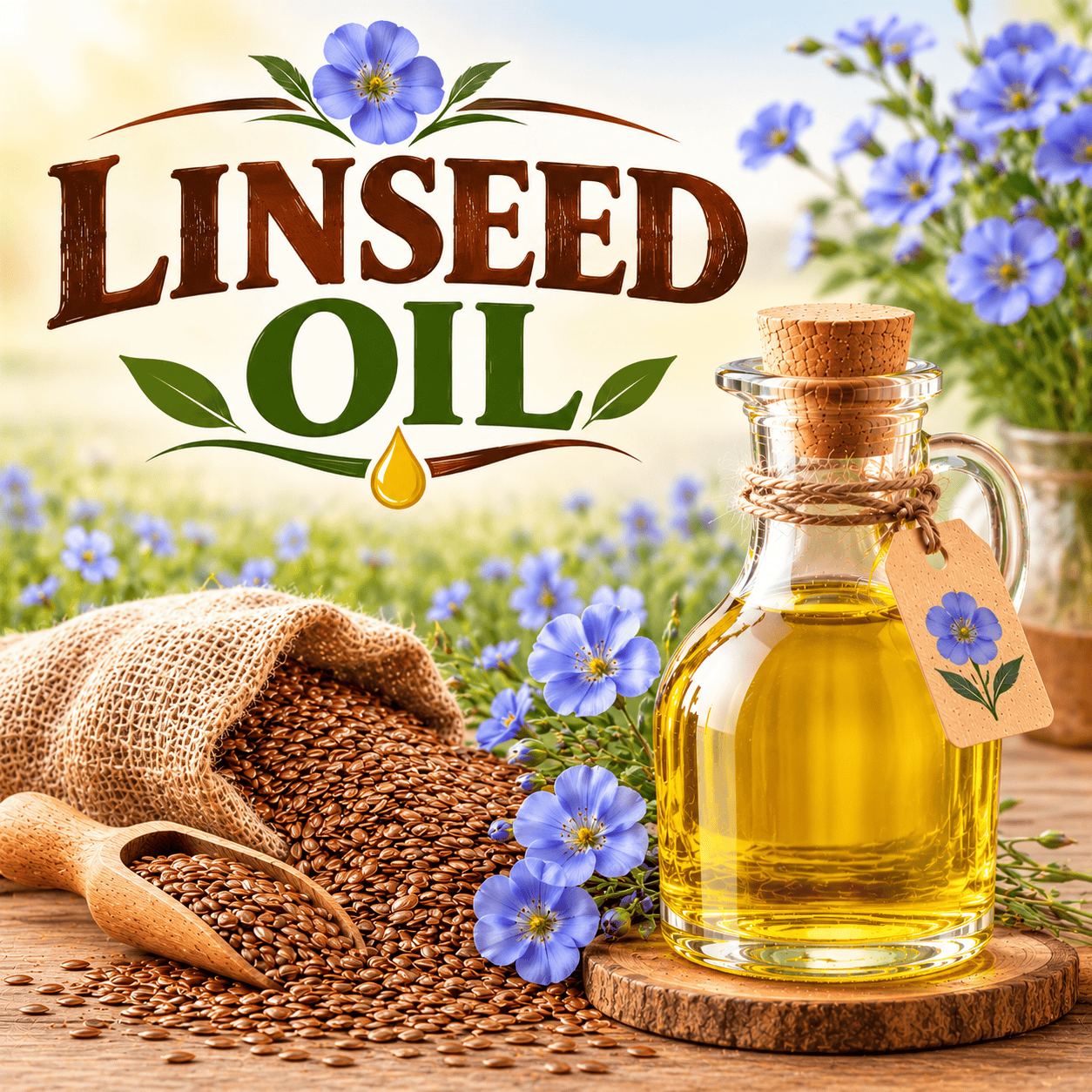
Linseed Oil
Linseed Oil is a plant-based fixed oil obtained from the seeds of the flax plant, scientifically known as Linum usitatissimum. It is widely used in industrial coatings, paints, wood finishes, printing inks, selected food products and specialty formulations.
Linseed Oil is particularly known for its high content of alpha-linolenic acid (ALA), an omega-3 fatty acid. Its composition and drying characteristics make it useful in several industries.
The oil is commercially available in different grades, including raw Linseed Oil, refined Linseed Oil and processed drying oils. Each grade has different properties and applications, making it important to select the correct product for the intended purpose.
What Is Linseed Oil?
Linseed Oil is a fixed vegetable oil extracted from flax seeds. It is obtained through mechanical pressing or other suitable extraction methods.
The oil contains several fatty acids, including alpha-linolenic acid, linoleic acid and oleic acid. Because of its high proportion of unsaturated fatty acids, Linseed Oil can undergo oxidation and form a solid film when exposed to air under suitable conditions.
This property makes certain grades particularly valuable in paints, varnishes, wood treatments and other industrial applications.
Botanical Information
- Common Name: Linseed Oil
- Alternative Name: Flax Seed Oil
- Botanical Name: Linum usitatissimum
- Plant Family: Linaceae
- Source: Flax seeds
- Product Type: Fixed vegetable oil
- Extraction Methods: Mechanical pressing and other suitable extraction methods
- Key Fatty Acid: Alpha-linolenic acid (ALA)
- Common Applications: Paints, coatings, wood finishes, printing inks, food and specialty products
How Is Linseed Oil Extracted?
1. Seed Selection and Cleaning
Flax seeds are selected according to quality requirements. Cleaning removes dust, dirt, plant debris and other unwanted materials before processing.
2. Seed Preparation
The seeds are prepared according to the extraction method. Suitable handling helps maintain the required quality and consistency of the finished oil.
3. Oil Extraction
Linseed Oil is commonly obtained through mechanical pressing. Cold pressing may be used when the production process aims to limit external heat during extraction. Other commercial extraction processes may also be used.
4. Filtration and Refining
The extracted oil may be filtered to remove suspended particles. Depending on the intended grade, further refining may be carried out to improve colour, odour and other physical characteristics.
5. Processing and Packaging
Some Linseed Oil products undergo additional processing, such as heating or the addition of drying agents, to modify their drying behaviour.
The finished oil is tested against relevant specifications and packed in suitable containers according to its intended application.
Types of Linseed Oil
1. Raw Linseed Oil
Raw Linseed Oil is generally obtained through extraction and filtration without additional drying treatments. It dries relatively slowly when applied as a coating, making it suitable for selected traditional applications.
2. Refined Linseed Oil
Refined Linseed Oil undergoes additional processing to improve certain properties such as colour, odour and consistency. Its applications depend on the specific grade and quality specifications.
3. Boiled Linseed Oil
Boiled Linseed Oil is a processed product designed to dry faster than raw Linseed Oil. Commercial products may contain metallic drying agents or other additives.
The term “boiled” does not necessarily mean that the oil has simply been boiled. Always check the product’s technical documentation and composition.
4. Stand Oil
Stand Oil is produced by heating Linseed Oil under controlled conditions, often with limited oxygen exposure. This process increases viscosity and changes its film-forming properties.
It is used in selected paint, varnish and artistic coating formulations.
Uses and Applications of Linseed Oil
1. Paint Industry
Linseed Oil has a long history of use in oil-based paints. Certain grades act as drying oils and help form a continuous film as they oxidise and cure.
It may be used in:
- Traditional oil paints
- Artist paints
- Protective coatings
- Specialty paint formulations
- Selected decorative finishes
The appropriate grade depends on the drying time, viscosity and performance requirements of the finished product.
2. Wood Finishing and Furniture Care
Linseed Oil is widely used in wood finishing and furniture treatment. Suitable grades penetrate or coat wooden surfaces and can develop a protective finish as they cure.
Common applications include:
- Wooden furniture finishing
- Wooden doors and windows
- Decorative woodwork
- Wooden tool handles
- Selected wooden flooring treatments
- Traditional wood-care products
Application instructions and curing conditions depend on the specific product.
3. Varnishes and Protective Coatings
Linseed Oil is used in certain varnish and coating formulations because of its film-forming properties.
It can contribute to surface protection, appearance and the performance characteristics of traditional coating systems.
4. Printing Ink Industry
Selected Linseed Oil grades are used in printing ink formulations. Their drying and film-forming characteristics can contribute to ink performance.
The specific grade is selected according to viscosity, drying behaviour and compatibility with other formulation ingredients.
5. Putty Manufacturing
Linseed Oil has applications in traditional putty formulations, including certain glazing putties used in building and construction work.
It can act as a binder and contribute to the consistency and workability of the putty.
6. Textile and Specialty Industrial Applications
Processed Linseed Oil may be used in selected industrial formulations, including certain textile treatments and specialty coatings.
Its use depends on the required drying properties, compatibility and technical specifications.
7. Food Industry
Food-grade Linseed Oil is also known as edible Flax Seed Oil. It is used in selected cold food preparations and dietary products because of its alpha-linolenic acid content.
Due to its high level of polyunsaturated fatty acids, it is sensitive to oxidation and is generally unsuitable for prolonged high-temperature cooking.
Only Linseed Oil specifically manufactured and approved for food use should be considered edible.
8. Soap and Cosmetic Manufacturing
Suitable grades of Linseed Oil may be used in certain soapmaking and cosmetic formulations. Its fatty acid composition influences the characteristics of the finished product.
Cosmetic formulators should evaluate stability, odour, compatibility and the intended application before incorporating it into a formulation.
Key Characteristics of Linseed Oil
1. Rich in Alpha-Linolenic Acid
Linseed Oil is known for its high content of alpha-linolenic acid (ALA), an essential omega-3 fatty acid. It also contains linoleic acid, oleic acid and other fatty acids.
2. Drying Properties
Certain grades of Linseed Oil are classified as drying oils. When exposed to oxygen, they undergo oxidation and polymerisation, gradually forming a solid film.
3. Film-Forming Ability
Its film-forming characteristics make it valuable in paints, varnishes, protective coatings and wood finishes.
4. Plant-Derived Raw Material
Linseed Oil is obtained from flax seeds and is used as a renewable plant-derived ingredient in different industrial and commercial applications.
5. Different Processing Grades
Raw, refined, boiled and stand Linseed Oils have different physical and performance characteristics. They should be selected according to the intended application.
Linseed Oil vs Flax Seed Oil
Linseed Oil and Flax Seed Oil generally refer to oil obtained from the same plant, Linum usitatissimum. However, commercial naming and processing can differ.
| Feature | Linseed Oil | Flax Seed Oil |
|---|---|---|
| Botanical source | Linum usitatissimum | Linum usitatissimum |
| Source material | Seeds | Seeds |
| Common applications | Industrial coatings, paints, wood finishes | Food, supplements and selected cosmetics |
| Processing | May include industrial treatments | Often cold-pressed or refined for its intended grade |
| Edible suitability | Only food-grade products | Only food-grade products |
Important: Industrial Linseed Oil, boiled Linseed Oil and products containing drying agents must never be treated as edible Flax Seed Oil.
Important Quality Parameters
Businesses purchasing Linseed Oil should review the supplier’s technical documents and confirm that the grade is appropriate for the intended application.
Important quality checks may include:
- Botanical identity and seed source
- Extraction and processing method
- Fatty acid profile
- Acid value
- Peroxide value
- Iodine value
- Viscosity
- Colour and odour
- Moisture and impurities
- Drying time for relevant industrial grades
- Additive and drying-agent information
- Certificate of Analysis (COA)
- Technical Data Sheet (TDS)
- Safety Data Sheet (SDS)
Food-grade and industrial-grade products require different specifications and safety checks.
How to Store Linseed Oil
Proper storage is important for maintaining product quality and preventing unwanted oxidation.
- Store in tightly sealed, suitable containers.
- Protect the oil from excessive heat and direct sunlight.
- Minimise unnecessary exposure to oxygen.
- Follow the supplier’s recommended storage conditions.
- Keep food-grade and industrial-grade products separate.
- Observe the product’s stated shelf life and handling instructions.
Fire Safety Precautions
Drying oils can generate heat during oxidation. Cloths, rags or other absorbent materials soaked with Linseed Oil may self-heat and spontaneously ignite if handled or discarded improperly.
Always follow the manufacturer’s fire-safety instructions. Store and dispose of oil-soaked materials in accordance with appropriate local safety guidance.
Safety and Precautions
The correct grade of Linseed Oil must be selected for its intended application.
- Food-grade Linseed Oil should meet applicable food safety requirements.
- Cosmetic-grade oil should meet relevant cosmetic specifications.
- Industrial Linseed Oil should only be used for its specified industrial purposes.
- Boiled Linseed Oil may contain drying agents or other additives and must not be consumed.
- Follow the product’s Safety Data Sheet for handling, storage and disposal.
For topical applications, assess skin compatibility and discontinue use if irritation occurs.
Frequently Asked Questions (FAQs)
1. What is Linseed Oil?
Linseed Oil is a fixed vegetable oil extracted from the seeds of Linum usitatissimum. It is used in paints, coatings, wood finishes, printing inks, selected food products and other applications.
2. What is Linseed Oil used for?
It is used in wood finishing, paints, varnishes, protective coatings, printing inks, putty, selected cosmetic formulations and food products when the appropriate grade is used.
3. Is Linseed Oil the same as Flax Seed Oil?
Both generally refer to oil obtained from flax seeds. However, commercial products can differ in processing, additives, purity and intended applications.
4. What is Boiled Linseed Oil?
Boiled Linseed Oil is a processed Linseed Oil product designed to dry faster than raw oil. Commercial products may contain drying agents or other additives.
5. Is Linseed Oil a drying oil?
Yes. Linseed Oil is classified as a drying oil because certain grades oxidise and polymerise when exposed to air, forming a solid film over time.
6. Is Linseed Oil used in the paint industry?
Yes. It is used in traditional oil paints, artist paints, varnishes and selected protective coating formulations because of its film-forming properties.
7. Can Linseed Oil be used on wooden furniture?
Suitable raw or processed grades are used in wood finishing and furniture care. The product should be selected according to the wood type and manufacturer’s application instructions.
8. Can all Linseed Oil be consumed?
No. Only products specifically manufactured and approved for food use should be consumed. Industrial and boiled Linseed Oil products may contain additives and are not suitable for ingestion.
Conclusion
Linseed Oil is a versatile plant-derived oil with applications across the paint, coatings, wood finishing, printing ink, construction and food industries. Its high unsaturated fatty acid content and drying characteristics make it a valuable raw material for several commercial formulations.
For manufacturers, industrial buyers and formulators, selecting the correct grade, reviewing technical documentation and following proper storage and fire-safety procedures are essential for maintaining product quality and safe handling.