
Jojoba Oil
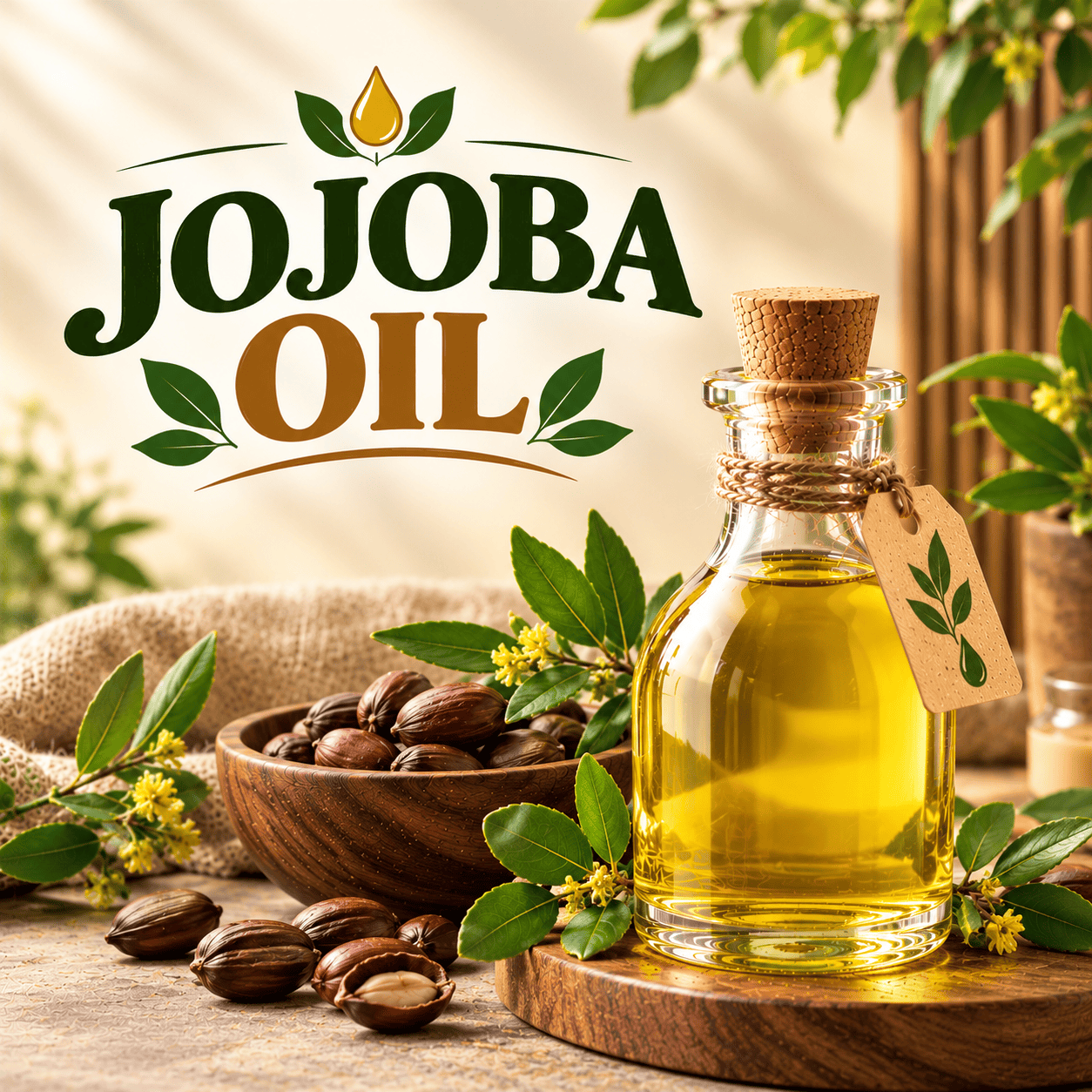
Jojoba Oil
Jojoba Oil is a popular plant-derived ingredient widely used in skincare, cosmetics, hair care and personal care products. It is obtained from the seeds of the jojoba plant and is valued for its lightweight texture, smooth feel and excellent formulation versatility.
Unlike most vegetable oils, Jojoba Oil is primarily composed of liquid wax esters rather than triglycerides. Its composition makes it chemically different from conventional carrier oils such as almond oil, coconut oil and olive oil.
Jojoba Oil is commonly incorporated into facial oils, moisturisers, hair serums, massage oils, lip care products and other cosmetic formulations. It is available in different commercial grades, including golden, refined and deodorised varieties.
What Is Jojoba Oil?
Jojoba Oil is a liquid wax obtained from the seeds of Simmondsia chinensis, an evergreen shrub native to arid and semi-arid regions. The plant is cultivated in several countries for its oil-rich seeds.
The oil contains long-chain wax esters, along with smaller amounts of other naturally occurring components. Its composition gives it distinctive physical and chemical characteristics compared with conventional vegetable oils.
Botanical Information
- Common Name: Jojoba Oil
- Botanical Name: Simmondsia chinensis
- Plant Family: Simmondsiaceae
- Source: Seeds
- Product Type: Liquid wax ester
- Extraction Methods: Mechanical pressing and other suitable extraction methods
- Common Varieties: Golden Jojoba Oil and Refined Jojoba Oil
- Common Applications: Skincare, cosmetics, hair care, massage and personal care products
How Is Jojoba Oil Extracted?
1. Seed Collection and Selection
Jojoba seeds are collected from mature plants and selected according to quality requirements. Damaged seeds and unwanted materials are removed before processing.
2. Cleaning and Preparation
The seeds are cleaned to remove dust, dirt and other foreign particles. They are then prepared for the oil extraction process.
3. Oil Extraction
Jojoba Oil is generally obtained through mechanical pressing. Cold pressing is used when the production process is designed to limit external heat during extraction.
4. Filtration and Refining
The extracted oil may be filtered to remove suspended particles. Depending on the desired commercial grade, it may undergo further refining or deodorisation.
Golden Jojoba Oil generally retains more of its natural colour and characteristic odour, while refined grades are processed to achieve a lighter appearance and more neutral odour.
5. Quality Testing and Packaging
The finished product is tested against relevant specifications. Quality checks may include appearance, odour, acid value, ester value, moisture and other parameters.
Suitable packaging helps protect the oil from contamination and maintain its quality during storage.
Uses and Applications of Jojoba Oil
1. Skincare Products
Jojoba Oil is widely used in skincare formulations because of its smooth texture and emollient properties. It can be incorporated into creams, lotions, facial oils and moisturisers.
Common applications include:
- Facial moisturisers
- Skin-conditioning creams
- Body lotions
- Facial oil blends
- Cleansing oils
- Cosmetic balms
Its compatibility with different cosmetic ingredients makes it useful in a variety of skincare formulations.
2. Facial Oils and Serums
Jojoba Oil is commonly used as a base ingredient in facial oils and oil-based serums. Its lightweight feel makes it suitable for formulations designed for smooth application.
It can be blended with other carrier oils, botanical extracts and compatible cosmetic ingredients depending on the desired product characteristics.
3. Hair Care Products
Jojoba Oil is used in various hair care formulations, including:
- Hair oils
- Hair serums
- Conditioners
- Hair masks
- Scalp-care products
- Leave-in conditioning products
It can help condition the hair and improve the sensory feel of hair care formulations.
4. Massage and Body Oils
Jojoba Oil is suitable for selected massage and body oil formulations. Its smooth spreadability and stable formulation characteristics make it useful as a base ingredient or blending oil.
It may also be combined with other suitable carrier oils to achieve the desired texture and application properties.
5. Lip Care Products
Cosmetic manufacturers may use Jojoba Oil in lip balms, lip conditioners and other lip care products. Its emollient properties help contribute to a smooth texture and comfortable application.
6. Soap and Personal Care Products
Jojoba Oil may be incorporated into selected personal care formulations, including cleansing products, balms and specialty cosmetic products.
It can also be used in certain soapmaking formulations, although its liquid wax ester composition differs from conventional triglyceride oils. Formulators should account for this difference when calculating and testing recipes.
7. Makeup and Cosmetic Products
Jojoba Oil is used in makeup and colour cosmetic formulations, including selected foundations, lip products and makeup-removing oils.
Its texture and compatibility with oil-based ingredients make it useful in products where smooth application and conditioning properties are desired.
8. Specialty Cosmetic Formulations
Jojoba Oil can be used in premium and specialty personal care products, including facial blends, body oils, massage formulations and conditioning balms.
Manufacturers should select the appropriate grade based on product requirements and supplier specifications.
Key Characteristics of Jojoba Oil
1. Unique Wax Ester Composition
One of the most distinctive characteristics of Jojoba Oil is its composition. Unlike most conventional vegetable oils, it mainly consists of long-chain liquid wax esters rather than triglycerides.
2. Lightweight Texture
Jojoba Oil has a smooth texture and is commonly used in formulations where easy spreading and a comfortable skin feel are important.
3. Good Oxidative Stability
Jojoba Oil generally has good resistance to oxidation compared with many conventional vegetable oils. However, proper packaging and storage are still necessary to maintain product quality.
4. Golden and Refined Grades
Golden Jojoba Oil retains more of its natural colour, while refined Jojoba Oil is processed to produce a lighter and often more neutral product.
5. Formulation Versatility
It can be incorporated into different oil-based cosmetic products and selected emulsions. Its compatibility should be assessed within the complete formulation.
Golden Jojoba Oil vs Refined Jojoba Oil
| Feature | Golden Jojoba Oil | Refined Jojoba Oil |
|---|---|---|
| Appearance | Naturally golden colour | Lighter or nearly colourless |
| Processing | Usually less refined | Further processed |
| Odour | Characteristic mild odour | Generally more neutral |
| Applications | Natural and botanical formulations | Products requiring neutral colour and odour |
| Selection | Depends on desired natural characteristics | Depends on formulation requirements |
Both grades have commercial applications. The choice depends on the product design, quality specifications and manufacturer’s requirements.
Important Quality Parameters
Businesses purchasing Jojoba Oil should review the supplier’s technical documents and confirm that the product is suitable for the intended application.
Important quality checks may include:
- Botanical identity and seed source
- Extraction and refining method
- Appearance and colour
- Odour
- Acid value
- Ester value
- Iodine value
- Saponification value, where applicable
- Moisture and impurities
- Relevant contaminant testing
- Certificate of Analysis (COA)
- Technical Data Sheet (TDS)
- Safety Data Sheet (SDS), where applicable
Quality specifications may differ between golden, refined and other commercial grades.
How to Store Jojoba Oil
Proper storage helps maintain the quality and performance of Jojoba Oil.
- Store in a tightly sealed container.
- Keep away from direct sunlight.
- Avoid excessive heat.
- Use clean and suitable handling equipment.
- Protect the product from contamination.
- Follow the supplier’s recommended storage conditions.
- Observe the stated shelf life.
Always follow the manufacturer’s storage and handling recommendations for the specific grade.
Safety and Precautions
Jojoba Oil is commonly used in cosmetic formulations, but finished products should still be assessed for skin compatibility and intended use.
Consider a patch test before using a new topical product. Discontinue use if irritation or an adverse reaction occurs.
Choose a product specifically manufactured for cosmetic or personal care applications. Do not assume that every commercial grade is suitable for ingestion or food applications.
Manufacturers should follow relevant cosmetic regulations, ingredient documentation requirements and product safety assessments.
Frequently Asked Questions (FAQs)
1. What is Jojoba Oil?
Jojoba Oil is a plant-derived liquid wax obtained from the seeds of Simmondsia chinensis. It is widely used in skincare, hair care, cosmetics and personal care products.
2. What is Jojoba Oil used for?
It is used in facial oils, moisturisers, body lotions, hair serums, conditioners, massage oils, lip balms and specialty cosmetic formulations.
3. Is Jojoba Oil a carrier oil?
Jojoba Oil is commonly used as a carrier oil in cosmetic and personal care formulations. Chemically, however, it is primarily a liquid wax ester rather than a conventional triglyceride vegetable oil.
4. Is Jojoba Oil an essential oil?
No. Jojoba Oil is a non-volatile liquid wax obtained from seeds. Essential oils are concentrated aromatic materials extracted from specific plant parts.
5. What is the difference between Golden and Refined Jojoba Oil?
Golden Jojoba Oil generally retains more of its natural colour and characteristic odour. Refined Jojoba Oil is further processed to achieve a lighter colour and more neutral odour.
6. Can Jojoba Oil be used in hair care products?
Yes. It may be included in hair oils, conditioners, serums, hair masks and other hair-conditioning formulations.
7. Is Jojoba Oil suitable for skincare?
Suitable cosmetic grades are commonly used in facial oils, moisturisers, lotions and other skincare products. The finished formulation should be assessed for stability and skin compatibility.
8. How should Jojoba Oil be stored?
Store it in a tightly closed container away from direct sunlight, excessive heat and contamination. Follow the supplier’s storage instructions and shelf-life recommendations.
Conclusion
Jojoba Oil is a versatile plant-derived liquid wax widely used in skincare, cosmetics, hair care and personal care manufacturing. Its unique wax ester composition, smooth texture and formulation versatility make it a valuable ingredient for different cosmetic applications.
For manufacturers, formulators and ingredient buyers, selecting the appropriate grade, checking technical documentation and following proper storage practices are important for maintaining consistent product quality.