
Borage Seed Oil
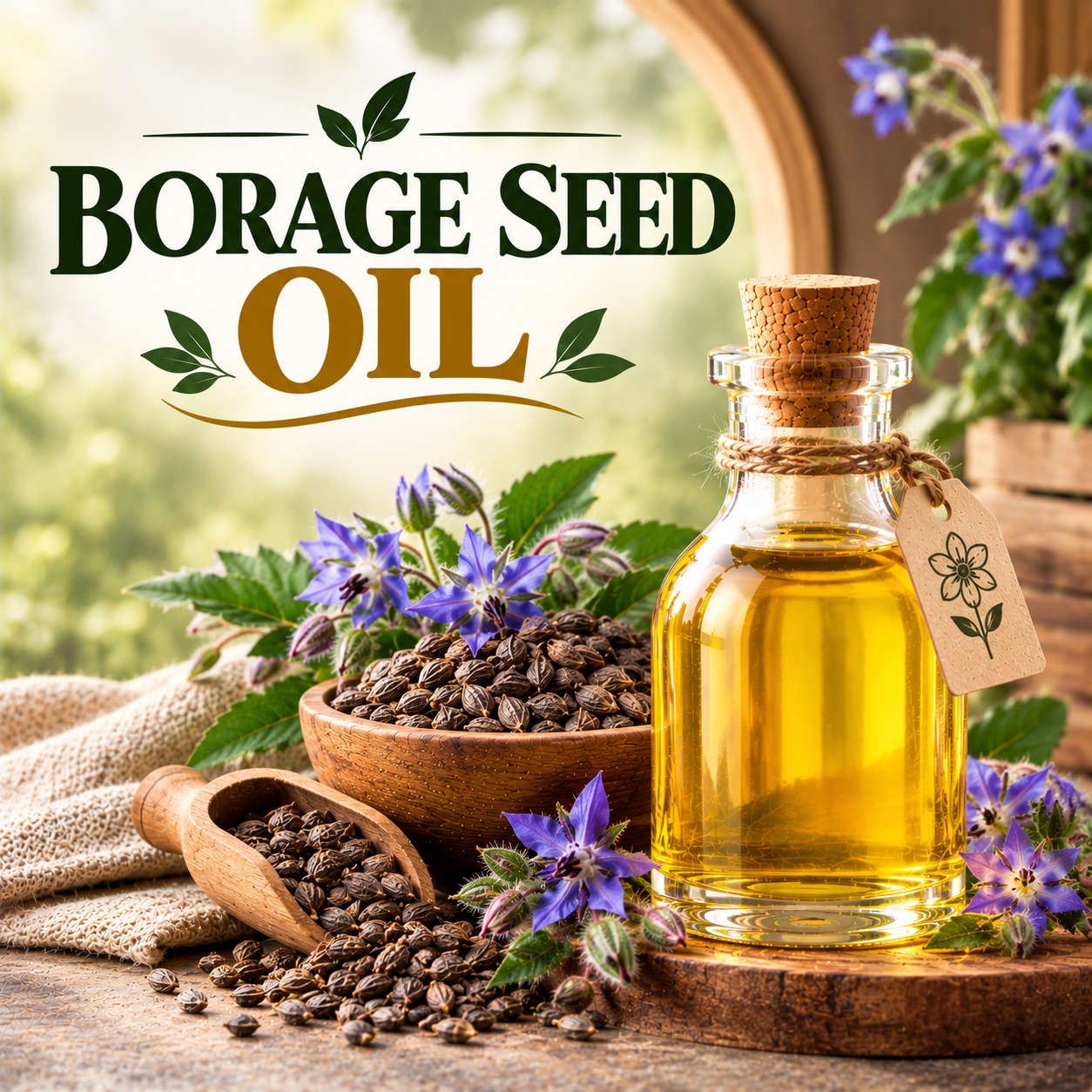
Borage Seed
Borage Seed Oil is a plant-based fixed oil widely used in skincare, cosmetics, personal care and specialized nutritional formulations. It is obtained from the seeds of the borage plant and is valued for its distinctive fatty acid profile, particularly its naturally occurring gamma-linolenic acid (GLA).
Due to its composition and emollient properties, Borage Seed Oil is used by manufacturers developing facial oils, creams, lotions, skin-conditioning products and other specialty formulations. Its suitability depends on the product grade, processing method, quality specifications and intended application.
What Is Borage Seed Oil?
Borage Seed Oil is a fixed vegetable oil extracted from the seeds of Borago officinalis, a flowering plant belonging to the Boraginaceae family.
The oil is especially known for containing gamma-linolenic acid (GLA), an omega-6 polyunsaturated fatty acid. Its fatty acid composition makes it a distinctive ingredient compared with many conventional cosmetic carrier oils.
Borage Seed Oil is available in different commercial grades, including cosmetic and nutritional grades. Depending on the processing method, it may be supplied as cold-pressed, refined or otherwise processed oil.
Botanical Information of Borage Seed Oil
- Common Name: Borage Seed Oil
- Botanical Name: Borago officinalis
- Plant Family: Boraginaceae
- Plant Part Used: Seeds
- Oil Type: Fixed vegetable oil
- Extraction Methods: Mechanical pressing and other suitable seed-oil extraction processes
- Key Characteristic: Naturally contains gamma-linolenic acid (GLA)
- Common Applications: Skincare, cosmetics, personal care and selected nutritional products
The oil’s colour, aroma, fatty acid composition and stability can vary according to seed quality, growing conditions, extraction method, refining and storage.
How Is Borage Seed Oil Extracted?
Borage Seed Oil is obtained from mature seeds using controlled oil-extraction processes.
1. Seed Selection
Suitable borage seeds are selected and inspected for quality, cleanliness and suitability for processing.
2. Seed Preparation
The seeds are prepared according to the extraction method. Processing conditions are managed to help maintain the desired oil quality.
3. Oil Extraction
The oil may be obtained through mechanical pressing or another suitable commercial extraction process. Cold-pressed grades are produced under controlled conditions intended to limit excessive heat exposure.
4. Filtration and Processing
The extracted oil may be filtered or further processed depending on the desired commercial grade and specifications.
5. Quality Testing
The finished oil is evaluated against relevant quality parameters. Testing may include fatty acid composition, free fatty acids, peroxide value, moisture, contaminants and other grade-specific requirements.
Key Characteristics of Borage Seed Oil
Borage Seed Oil is particularly valued for its fatty acid composition and suitability for specialized formulations.
- Gamma-Linolenic Acid (GLA): A notable omega-6 fatty acid naturally present in the oil.
- Linoleic Acid: Another important omega-6 fatty acid found in its composition.
- Emollient Properties: Helps condition and soften the skin when incorporated into suitable cosmetic products.
- Plant-Derived Ingredient: Obtained from borage seeds.
- Specialty Formulation Uses: Suitable grades can be used in skincare and other carefully designed formulations.
- Grade Options: Available in different forms depending on processing and intended use.
The exact fatty acid percentages vary by source and processing. Buyers should refer to the supplier’s Certificate of Analysis (COA) for batch-specific information.
Uses and Applications of Borage Seed Oil
1. Skincare Products
Borage Seed Oil is used in skincare formulations where a specialty emollient oil is desired. Its fatty acid profile makes it a useful ingredient in selected skin-conditioning products.
Common applications include:
- Facial oils
- Moisturizing creams
- Body lotions
- Skin-conditioning serums
- Night creams
- Specialty skincare blends
Formulators should determine the appropriate concentration according to the product’s texture, stability, packaging and intended use.
2. Anti-Ageing Cosmetic Formulations
Borage Seed Oil may be incorporated into cosmetic products designed to improve skin softness and provide emollient care.
Potential applications include:
- Facial moisturizers
- Premium skincare oils
- Nourishing creams
- Cosmetic serums
- Skin-conditioning blends
Cosmetic claims should be supported by appropriate product testing. The presence of GLA alone does not establish that a finished product treats wrinkles, eczema or other medical conditions.
3. Sensitive-Skin and Skin-Conditioning Products
Borage Seed Oil is sometimes selected for formulations intended to provide gentle emollient care. However, suitability for sensitive skin depends on the complete formulation, the oil’s quality and the individual user.
It may be considered for:
- Skin-conditioning creams
- Moisturizing lotions
- Facial oil blends
- Body-care formulations
- Specialty cosmetic products
Finished products should undergo suitable safety and compatibility assessments before being marketed for particular skin types.
4. Hair Care Products
Borage Seed Oil can be included in selected hair-conditioning formulations to contribute to the oil phase and improve the feel of the finished product.
Possible applications include:
- Hair oils
- Hair serums
- Conditioning masks
- Hair creams
- Specialty scalp-care cosmetics
The appropriate formulation depends on the oil’s stability, compatibility with other ingredients and desired sensory properties.
5. Premium Cosmetic and Personal Care Products
Because of its distinctive fatty acid profile, Borage Seed Oil may be used in premium or specialty personal care formulations.
Examples include:
- Facial oil blends
- Body oils
- Skin-conditioning balms
- Creams and lotions
- Specialty cosmetic blends
The oil may be combined with other carrier oils, waxes, emulsifiers and compatible cosmetic ingredients after appropriate formulation testing.
6. Nutritional Formulations
Specific nutritional-grade Borage Seed Oil products may be used in supplements or other regulated nutritional applications, depending on the market and product requirements.
For these uses, manufacturers must verify the product’s intended grade, purity, contaminant limits, stability and regulatory compliance. Cosmetic-grade Borage Seed Oil should not automatically be considered suitable for consumption.
Understanding Gamma-Linolenic Acid (GLA)
Gamma-linolenic acid, commonly abbreviated as GLA, is an omega-6 polyunsaturated fatty acid found in certain plant oils. Borage Seed Oil is recognized as a notable botanical source of GLA.
GLA is one of the important parameters buyers may review when comparing Borage Seed Oil grades. Its concentration can vary depending on seed variety, growing conditions, extraction method and processing.
For commercial purchases, the following details may be relevant:
- GLA percentage
- Total fatty acid profile
- Free fatty acid value
- Peroxide value
- Oxidation stability
- Processing method
- Batch-specific Certificate of Analysis
A verified fatty acid profile is more reliable than assuming that every Borage Seed Oil product has the same composition.
Borage Seed Oil vs. Evening Primrose Oil
Borage Seed Oil and Evening Primrose Oil are both known for their GLA content, but they come from different botanical sources.
| Feature | Borage Seed Oil | Evening Primrose Oil |
|---|---|---|
| Botanical source | Borago officinalis | Oenothera biennis is a common source |
| Plant part | Seeds | Seeds |
| Oil type | Fixed vegetable oil | Fixed vegetable oil |
| Notable fatty acid | Gamma-linolenic acid (GLA) | Gamma-linolenic acid (GLA) |
| Common applications | Cosmetics, skincare and specialty formulations | Cosmetics, skincare and specialty nutritional products |
| Selection factors | GLA level, grade and stability | GLA level, grade and stability |
The two oils are not interchangeable in every formulation. Selection should be based on the required specifications, intended use and supplier documentation.
Quality Considerations When Buying Borage Seed Oil
Selecting the correct grade is important for cosmetic manufacturers, ingredient buyers and formulation specialists.
Before purchasing Borage Seed Oil, consider the following:
- Botanical Identity: Confirm that the oil is derived from Borago officinalis seeds.
- Product Grade: Verify whether the product is cosmetic, personal care or nutritional grade.
- Extraction Method: Check whether the oil is cold-pressed, refined or produced through another method.
- Fatty Acid Profile: Review the documented GLA and other fatty acid levels.
- Certificate of Analysis (COA): Confirm batch-specific quality parameters.
- Peroxide Value: Review this parameter as an indicator relevant to oxidation quality.
- Contaminant Testing: Request relevant contaminant and safety documentation.
- Technical Data Sheet (TDS): Check physical properties and recommended applications.
- Safety Data Sheet (SDS): Review applicable handling and storage guidance.
For products intended for consumption, additional grade-specific safety, contaminant and regulatory checks are essential.
Storage and Handling of Borage Seed Oil
Borage Seed Oil contains polyunsaturated fatty acids, which can be susceptible to oxidation. Proper storage is therefore important for maintaining product quality.
- Store in a tightly sealed container.
- Protect the oil from direct sunlight and excessive heat.
- Minimize exposure to air and moisture.
- Use suitable packaging recommended by the supplier.
- Follow the supplier’s storage temperature instructions.
- Observe the stated shelf life and batch specifications.
- Check for changes in odour, appearance or other signs of deterioration.
Some commercial grades may require additional protection from oxidation. Follow the supplier’s technical guidance rather than assuming that every grade has identical storage requirements.
Safety and Precautions
Borage Seed Oil should be selected and used according to its grade and intended application.
- For topical use, assess the suitability of the finished formulation and consider a patch test.
- Do not apply oil that shows signs of deterioration.
- Use only appropriately documented products for nutritional applications.
- Borage-derived products intended for consumption should be checked for pyrrolizidine alkaloid contamination and suitable controls, as these compounds can pose a liver-safety risk.
- People who are pregnant, breastfeeding, taking medication or managing a medical condition should seek professional advice before using oral supplements.
- Follow the supplier’s handling instructions and applicable product regulations.
Borage Seed Oil is an ingredient, not a substitute for medical treatment. Avoid making therapeutic claims without appropriate scientific evidence and regulatory authorization.
Frequently Asked Questions About Borage Seed Oil
1. What is Borage Seed Oil?
Borage Seed Oil is a fixed vegetable oil extracted from the seeds of Borago officinalis. It is known for its gamma-linolenic acid content.
2. What is Borage Seed Oil used for?
It is used in skincare, cosmetics, facial oils, creams, lotions, hair-conditioning products and selected specialty formulations. Specific nutritional-grade products may also be used in regulated nutritional applications.
3. What is the botanical name of Borage Seed Oil?
The botanical name is Borago officinalis, a plant belonging to the Boraginaceae family.
4. What is GLA in Borage Seed Oil?
GLA stands for gamma-linolenic acid, an omega-6 polyunsaturated fatty acid naturally present in Borage Seed Oil. The exact concentration varies by product and batch.
5. Is Borage Seed Oil used in skincare?
Yes, suitable cosmetic grades can be incorporated into facial oils, moisturizers, creams, lotions and other skin-conditioning products.
6. Can Borage Seed Oil be used in hair care products?
Yes, it can be included in selected hair oils, serums, masks and conditioning formulations, depending on the formulation requirements.
7. Is Borage Seed Oil the same as Evening Primrose Oil?
No. They come from different plant species, although both oils can contain GLA. Their fatty acid profiles and product specifications may differ.
8. How should Borage Seed Oil be stored?
Store it in a tightly closed container away from heat, light and unnecessary air exposure. Follow the supplier’s specific storage and shelf-life instructions.
9. What should buyers check before purchasing Borage Seed Oil?
Buyers should check the product grade, GLA content, fatty acid profile, peroxide value, Certificate of Analysis, processing method and relevant safety documentation.
10. Is every Borage Seed Oil product suitable for consumption?
No. Only a product specifically manufactured and verified for the intended nutritional use should be considered. Appropriate contaminant testing, including controls for pyrrolizidine alkaloids, is important.
Conclusion
Borage Seed Oil is a specialty plant-derived oil valued for its gamma-linolenic acid content and its applications in skincare, cosmetics, personal care and selected nutritional formulations.
Its distinctive fatty acid profile makes it an ingredient worth considering for facial oils, moisturizing creams, skin-conditioning products and other specialized formulations. To ensure suitability, buyers and manufacturers should select the correct grade, review batch-specific documentation and follow proper storage and handling practices.