
Cashew Nut Oil
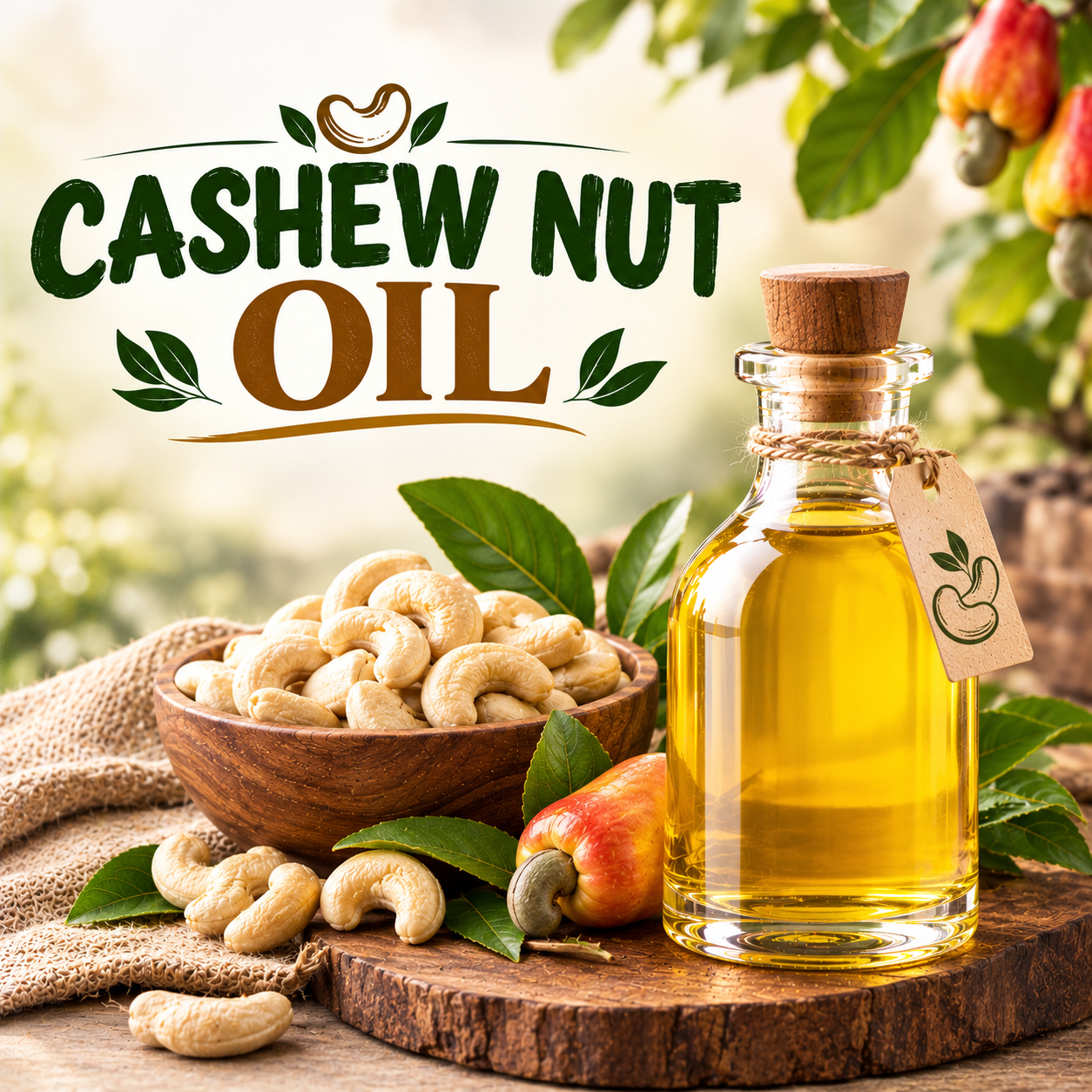
Cashew Nut Oil
Cashew Nut Oil is a plant-derived oil associated with the cashew nut and its processing. Its properties and applications depend on the specific material used, extraction process and commercial grade. In the ingredient industry, it is important to distinguish oil obtained from edible cashew kernels from cashew nut shell liquid (CNSL), which is a chemically different material.
Cashew kernel oil may be considered for selected food, cosmetic and personal care applications when it is produced and supplied to the required specifications. Cashew Nut Shell Liquid, on the other hand, is primarily an industrial raw material and is not interchangeable with edible kernel oil.
For manufacturers and buyers, confirming the product identity and intended grade is essential before selecting Cashew Nut Oil for a formulation.
What Is Cashew Nut Oil?
The term Cashew Nut Oil may refer to oil associated with cashew kernels, but commercial product names can sometimes be used inconsistently. The cashew tree is botanically known as Anacardium occidentale and belongs to the Anacardiaceae family.
Oil from the edible kernel is different from Cashew Nut Shell Liquid (CNSL), which is obtained from the shell surrounding the kernel. CNSL contains compounds such as anacardic acids and cardanol, depending on processing, and has industrial applications.
Therefore, buyers should check whether a product is kernel oil or shell liquid rather than relying on the product name alone.
Botanical Information of Cashew Nut Oil
- Common Name: Cashew Nut Oil
- Botanical Name: Anacardium occidentale
- Plant Family: Anacardiaceae
- Plant Material: Cashew kernel or nut shell, depending on the product
- Product Type: Must be confirmed from the supplier’s specification
- Potential Applications: Food, cosmetics or industrial applications, depending on identity and grade
Important: This blog focuses on the distinction between cashew kernel oil and Cashew Nut Shell Liquid. Their composition, safety requirements and applications are different.
How Is Cashew Nut Oil Produced?
The production process depends on the specific cashew-derived material.
1. Cashew Kernel Oil
When oil is produced from edible cashew kernels, suitable kernels are selected and prepared for processing. Oil may be obtained through mechanical pressing or another appropriate extraction method, followed by filtration and quality checks.
The final characteristics depend on the kernel quality, extraction process and any refining steps.
2. Cashew Nut Shell Liquid (CNSL)
CNSL is obtained from cashew nut shells using suitable industrial processing techniques. It is a distinct material used in applications such as resins, coatings, friction materials and other industrial products.
CNSL should not be treated as edible cashew kernel oil or used in food and skincare formulations unless a specific, legally compliant application has been established for the particular product.
3. Quality Testing
The finished material should be tested according to its intended use. Product identity, composition, contaminants and relevant safety parameters should be documented before commercial use.
Uses and Applications of Cashew Kernel Oil
When the product is confirmed to be suitable oil obtained from cashew kernels, possible applications depend on its grade and verified specifications.
1. Food Applications
Food-grade cashew kernel oil may be considered for suitable culinary or food-manufacturing applications where permitted by local regulations.
Potential uses depend on the product’s flavour, stability and processing characteristics. Only material specifically produced and verified for food use should be considered.
2. Cosmetic Formulations
A suitable cosmetic-grade kernel oil may be evaluated for use in oil-based formulations, depending on its composition, stability and safety documentation.
Potential applications may include:
- Emollient blends
- Body oils
- Creams and lotions
- Skin-conditioning products
- Specialty personal care formulations
The oil should not be assumed suitable for topical use merely because it comes from an edible nut. Cashew is a known allergen, so allergen risk and finished-product safety require careful assessment.
3. Soap and Personal Care Products
If the oil’s properties and specifications are appropriate, a formulator may assess it for selected soap or personal care products. Compatibility, oxidation stability, formulation performance and allergen considerations should be evaluated before use.
4. Specialty Ingredient Formulations
Cashew kernel oil may be considered for specialty formulations when the buyer has verified its exact composition and grade. The supplier’s documentation should guide its selection and recommended use level.
Industrial Applications of Cashew Nut Shell Liquid (CNSL)
Cashew Nut Shell Liquid is a separate cashew-derived material with established industrial uses. It must not be confused with oil extracted from the edible kernel.
1. Resin and Polymer Manufacturing
CNSL-derived materials can be used in certain resin and polymer systems. Their suitability depends on the grade, chemical composition and manufacturing requirements.
2. Coatings and Surface Materials
Processed CNSL derivatives are used in selected industrial coating and surface-material applications. The precise use depends on the product specification and required performance.
3. Friction Materials
Certain CNSL-based resins and derivatives are used in friction-material manufacturing, including selected brake-lining and clutch-related applications.
4. Industrial Chemicals
CNSL can serve as a feedstock for chemical derivatives used in industrial manufacturing. These applications require appropriate technical documentation and handling controls.
Safety note: Raw CNSL can be irritating and may cause skin reactions. It is not a substitute for edible cashew kernel oil and should not be used in food, skincare or personal care products as though it were an ordinary carrier oil.
Cashew Kernel Oil vs. Cashew Nut Shell Liquid
| Feature | Cashew Kernel Oil | Cashew Nut Shell Liquid (CNSL) |
|---|---|---|
| Source | Edible cashew kernel | Shell surrounding the kernel |
| Product identity | Kernel-derived oil | Shell-derived industrial liquid |
| Typical composition | Depends on extraction and grade | May contain anacardic acids, cardanol and related compounds |
| Food use | Only if verified food grade | Not edible oil; do not use as a food ingredient |
| Cosmetic use | Requires suitable grade and safety assessment | Not interchangeable with cosmetic carrier oils |
| Common applications | Selected food and specialty formulations | Resins, coatings and industrial materials |
| Key requirement | Food or cosmetic specifications, as applicable | Industrial specifications and safety controls |
The distinction is critical when ordering, storing, transporting or formulating with cashew-derived materials.
Quality Considerations When Buying Cashew Nut Oil
Before purchasing, manufacturers and buyers should confirm the following:
- Exact Product Identity: Establish whether the material is kernel oil or CNSL.
- Botanical Source: Confirm that the material is derived from Anacardium occidentale.
- Intended Grade: Verify food, cosmetic or industrial grade as applicable.
- Certificate of Analysis (COA): Review batch-specific quality results.
- Technical Data Sheet (TDS): Check physical properties, composition and recommended applications.
- Safety Data Sheet (SDS): Review handling, storage and hazard information.
- Allergen Information: Request relevant documentation for kernel-derived products.
- Regulatory Compliance: Confirm that the material meets the rules for the intended market and application.
Never rely on the name “Cashew Nut Oil” alone to determine how a product can safely be used.
Storage and Handling
Storage requirements depend on whether the material is kernel oil or CNSL.
For Cashew Kernel Oil
- Store in a tightly closed, compatible container.
- Protect from direct sunlight, excessive heat and air exposure.
- Follow the supplier’s storage temperature and shelf-life recommendations.
- Monitor the product for changes in odour, colour or other quality characteristics.
- Follow allergen-control and cross-contamination procedures where relevant.
For Cashew Nut Shell Liquid
- Follow the product-specific SDS and supplier handling instructions.
- Use suitable protective equipment and compatible containers.
- Prevent direct skin and eye contact.
- Keep the material away from unauthorized handling and inappropriate applications.
- Follow applicable industrial storage and disposal requirements.
Safety and Precautions
Cashew-derived products require careful identification and handling.
- Cashew kernel products may present an allergen risk to people with cashew allergies.
- Do not assume that an oil is edible or suitable for skin application without grade-specific verification.
- Raw CNSL can be irritating and may cause skin reactions.
- Avoid direct contact with CNSL and follow the relevant SDS.
- Do not use industrial-grade shell liquid in food, cosmetics or personal care products.
- Seek qualified regulatory and safety advice when developing products for human use.
Frequently Asked Questions About Cashew Nut Oil
1. What is Cashew Nut Oil?
The name may refer to oil obtained from cashew kernels, but some sellers use similar terminology for cashew-derived shell products. Always confirm the exact product identity.
2. What is the botanical name of cashew?
The botanical name of the cashew tree is Anacardium occidentale, which belongs to the Anacardiaceae family.
3. Is Cashew Nut Oil the same as Cashew Nut Shell Liquid?
No. Kernel oil and Cashew Nut Shell Liquid come from different parts of the cashew nut and have different compositions and uses.
4. Can Cashew Nut Oil be used in skincare?
Only a verified product suitable for cosmetic use should be considered. Cashew allergen risk and the finished formulation’s safety must be assessed.
5. Is Cashew Nut Oil edible?
Only cashew kernel oil specifically produced and verified as food grade should be considered for consumption. CNSL is not edible oil.
6. What is Cashew Nut Shell Liquid used for?
CNSL and its derivatives are used in certain industrial applications, including resins, coatings, friction materials and chemical manufacturing.
7. What documents should buyers request?
Buyers should request the COA, TDS, SDS, exact product identity, grade information and applicable allergen or regulatory documentation.
8. How should Cashew Nut Oil be stored?
Follow the storage guidance for the exact product. Kernel oil generally needs protection from heat, light and air, while CNSL requires product-specific industrial handling and storage controls.
9. Can CNSL be used as a carrier oil?
No. CNSL should not be treated as a conventional cosmetic carrier oil. Its composition and hazards differ from those of edible kernel oil.
10. What is the most important point when buying Cashew Nut Oil?
Confirm whether the product is kernel oil or Cashew Nut Shell Liquid before purchasing or using it. This determines the relevant applications, safety requirements and documentation.
Conclusion
Cashew-derived materials have different uses depending on their source and processing. Cashew kernel oil may be suitable for selected food, cosmetic or specialty formulations when the correct grade and safety requirements are met. Cashew Nut Shell Liquid is a separate industrial material used in applications such as resins, coatings and friction products.
For manufacturers, ingredient buyers and formulators, verifying the exact product identity, reviewing technical documentation and following appropriate safety practices are essential steps before use.