
Apricot Oil
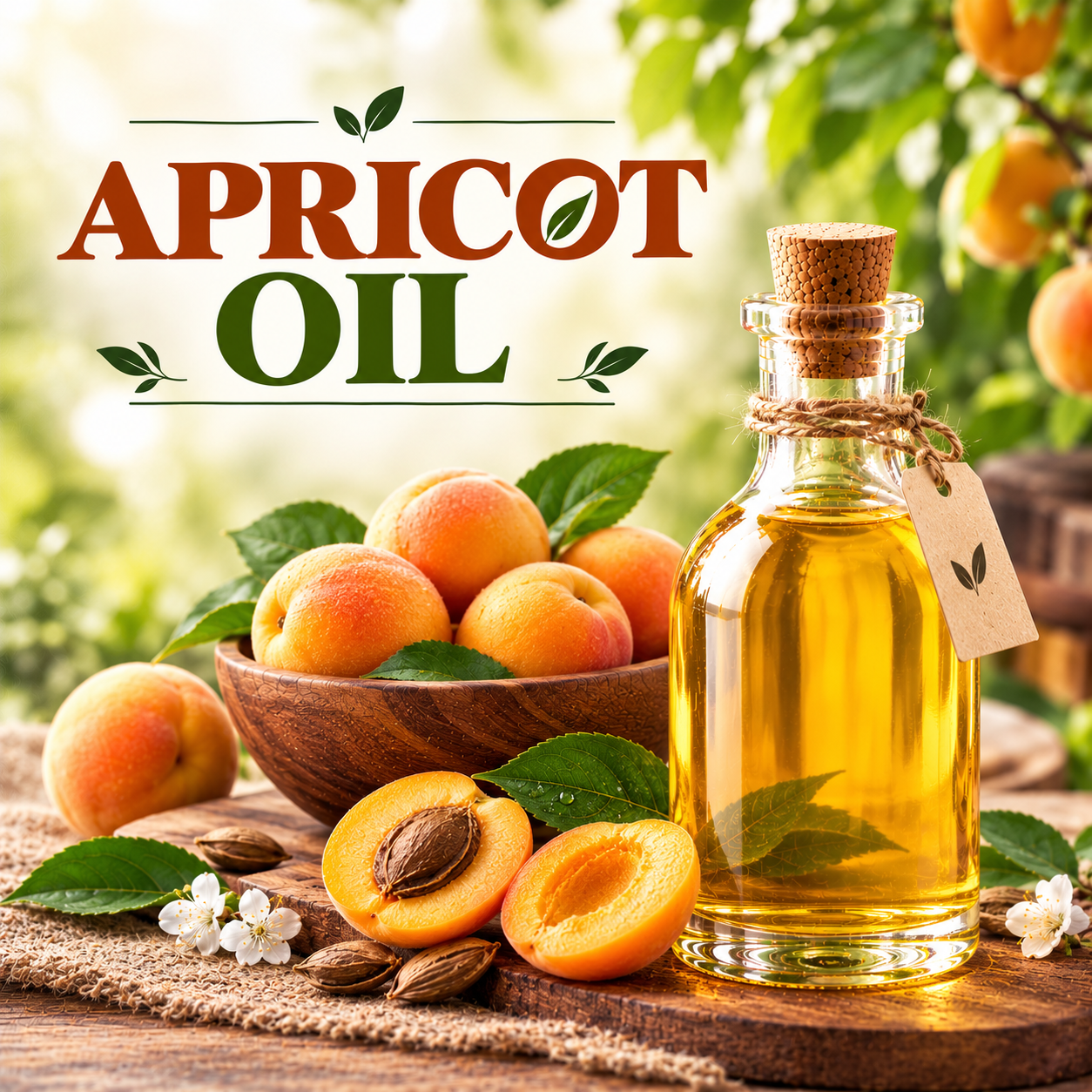
Apricot Oil
Apricot Oil, also known as Apricot Kernel Oil, is a plant-based oil obtained from the kernels inside apricot fruit pits. It is valued for its lightweight texture, smooth feel and emollient properties, making it a popular ingredient in skincare, hair care, cosmetics, massage oils and personal care formulations.
Apricot Kernel Oil is commonly produced through mechanical pressing of apricot kernels. Depending on the production process and product grade, the oil may be refined or unrefined. Its fatty acid profile and skin-conditioning characteristics make it suitable for a wide range of cosmetic and personal care applications.
Manufacturers use Apricot Oil in formulations designed to soften the skin, improve product spreadability and provide a smooth, moisturising feel. Its suitability for each application depends on the oil’s quality, processing method, specifications and intended use.
What Is Apricot Oil?
Apricot Oil is a vegetable oil extracted from the kernels of the apricot fruit, scientifically known as Prunus armeniaca. The plant belongs to the Rosaceae family.
Unlike apricot essential oil, Apricot Kernel Oil is a fixed oil containing fatty acids. It is generally used as an emollient and carrier oil in cosmetic formulations rather than as a volatile aromatic ingredient.
Botanical Information About Apricot Oil
- Botanical Name: Prunus armeniaca
- Family: Rosaceae
- Plant Part Used: Kernels inside the fruit pits
- Extraction Method: Commonly cold pressing or mechanical pressing
- Product Type: Fixed vegetable oil
- Appearance: Usually pale yellow to golden yellow, depending on grade and processing
- Texture: Generally lightweight and smooth
- Common Applications: Skincare, hair care, cosmetics, massage oils and personal care
How Is Apricot Oil Extracted?
Apricot Kernel Oil is commonly obtained by mechanically pressing the kernels. Processing methods can influence the colour, aroma, stability and final quality of the oil.
1. Selection of Apricot Kernels
Kernels are selected according to their quality, condition, origin and suitability for oil production.
2. Cleaning and Preparation
The kernels are cleaned and prepared for extraction. Proper raw material handling helps maintain the quality of the finished oil.
3. Oil Extraction
The prepared kernels are pressed mechanically to release their natural oil. Some manufacturers may use additional processing methods depending on the desired product specification.
4. Filtration and Refining
The extracted oil may be filtered to remove suspended particles. Depending on the grade, it may also undergo refining to adjust colour, odour or other quality characteristics.
5. Quality Testing and Packaging
The finished oil is evaluated against relevant specifications and packed in suitable containers to protect it from light, heat and oxidation.
The final product’s colour, aroma, fatty acid profile and stability may vary according to the kernel source and processing method.
Major Uses of Apricot Oil
Apricot Oil is valued for its emollient properties and versatility in personal care and cosmetic formulations.
1. Skincare Products
Apricot Oil is widely used as an emollient in skincare products. It helps soften the skin and supports a smooth, conditioned feel.
Potential applications include:
- Face oils
- Moisturisers and creams
- Body lotions
- Cleansing oils
- Skin-conditioning products
- Cosmetic oil blends
Its lightweight feel makes it a useful ingredient in formulations designed for everyday skincare. However, individual skin responses vary, and the finished product should be assessed for suitability.
2. Hair Care Products
Apricot Oil may be used in hair care formulations to improve softness, smoothness and manageability.
Potential applications include:
- Hair oils
- Hair serums
- Conditioners
- Hair masks
- Leave-in conditioning products
- Cosmetic scalp and hair oil blends
Its role is primarily conditioning and emollient. It should not be promoted as a guaranteed treatment for hair loss or scalp disorders.
3. Massage Oils
Apricot Kernel Oil is commonly used as a carrier oil in massage products because of its smooth texture and spreadability.
Potential applications include:
- Massage oils
- Body oils
- Spa formulations
- Aromatic massage blends
- Personal care oil blends
When combining it with essential oils, formulators should follow suitable dilution guidelines and assess the safety of the finished product.
4. Cosmetic Formulations
Apricot Oil can be incorporated into a variety of cosmetic products as an emollient and skin-conditioning ingredient.
Potential applications include:
- Face creams
- Body butters
- Lip care products
- Makeup removers
- Cleansing balms
- Cosmetic oil blends
The appropriate inclusion level depends on the formulation, desired texture, stability requirements and product specifications.
5. Soap and Bath Products
Depending on the formulation, Apricot Oil may be used in soap-making and selected bath products.
Potential applications include:
- Handmade soaps
- Cleansing bars
- Bath oils
- Body care products
- Skin-conditioning formulations
In soap-making, the oil’s fatty acid composition influences the properties of the finished soap. Formulators should calculate the appropriate formulation values rather than substituting oils without adjusting the recipe.
6. Personal Care and Beauty Products
Apricot Oil may be used in products designed to provide a soft, smooth and conditioned skin feel.
Potential applications include:
- Body lotions
- Hand creams
- Cuticle oils
- Beauty oils
- Skin-conditioning balms
- Personal care blends
Its compatibility with other ingredients should be checked during product development.
Fatty Acid Composition of Apricot Oil
Apricot Kernel Oil contains a mixture of fatty acids that contribute to its emollient properties and physical characteristics.
Common fatty acids may include:
- Oleic Acid: A monounsaturated fatty acid commonly found in apricot kernel oil.
- Linoleic Acid: An essential polyunsaturated fatty acid.
- Palmitic Acid: A saturated fatty acid.
- Stearic Acid: A saturated fatty acid that may be present in smaller proportions.
The exact fatty acid profile varies according to the apricot variety, growing conditions, geographical origin and processing method. A supplier’s specification or fatty acid analysis should be used to confirm the composition of a particular batch.
Apricot Kernel Oil is a fixed oil, so it differs from essential oils that primarily contain volatile aromatic compounds.
Apricot Oil vs Sweet Almond Oil
Apricot Oil and Sweet Almond Oil are both plant-based fixed oils used in cosmetic and personal care formulations. However, they come from different plants and may differ in fatty acid profile, texture, aroma and formulation performance.
Apricot Oil
- Obtained from apricot kernels.
- Commonly used as a skin-conditioning emollient.
- Often selected for lightweight cosmetic and massage oil formulations.
- Its properties depend on the kernel source and processing method.
Sweet Almond Oil
- Obtained from the kernels of sweet almonds.
- Commonly used in skincare, hair care and massage products.
- Has its own characteristic fatty acid profile and formulation properties.
- Requires appropriate allergen and raw material assessment for the intended application.
The best choice depends on the formulation’s texture, performance requirements, cost, sourcing and quality specifications.
Industrial Applications of Apricot Oil
Apricot Oil can serve as a raw material for manufacturers developing plant-based cosmetic and personal care products.
Common application areas include:
- Skincare: Moisturisers, creams, face oils and body lotions.
- Hair care: Hair oils, serums and conditioning products.
- Cosmetics: Makeup removers, balms and cosmetic oil blends.
- Massage products: Carrier oils and spa formulations.
- Soap-making: Selected cleansing bars and formulated soaps.
- Personal care: Skin-conditioning and beauty oil products.
Industrial buyers should verify whether the oil is refined or unrefined, its cosmetic or other applicable grade, and whether its specifications meet the needs of the finished product.
Quality Standards and Storage of Apricot Oil
Maintaining quality is important because fixed oils can change during storage, particularly when exposed to oxygen, heat and light.
When sourcing Apricot Oil, consider the following:
- Botanical identity and kernel source
- Extraction method
- Refined or unrefined grade
- Colour, odour and appearance
- Fatty acid profile
- Acid value and peroxide value, where applicable
- Certificate of Analysis (COA)
- Safety Data Sheet (SDS)
- Microbiological or other relevant testing, where appropriate
- Intended-use and regulatory documentation
Store Apricot Oil in a tightly sealed, compatible container in a cool, dry place away from direct sunlight and excessive heat. Minimise unnecessary exposure to air and follow the supplier’s recommended storage conditions and shelf life.
Safety and Handling Guidelines
Apricot Oil is generally used as a cosmetic fixed oil, but product quality and intended use remain important.
- Use a grade appropriate for the intended application.
- Perform a suitable skin-compatibility assessment before introducing the oil into a new cosmetic product.
- Avoid contact with the eyes and discontinue use if irritation occurs.
- Check the product’s specifications for possible allergens or contaminants.
- Do not assume that cosmetic-grade oil is suitable for food use.
- Use only properly processed, food-grade material for food applications where permitted.
- Store the oil properly to minimise oxidation and quality deterioration.
- Follow the supplier’s documentation and applicable regulations.
Important: Apricot kernels can contain cyanogenic compounds, including amygdalin. Apricot Kernel Oil should not automatically be considered food-safe merely because it is a plant-derived oil. Food use requires a suitable product grade, appropriate processing and verification of applicable safety requirements.
Frequently Asked Questions About Apricot Oil
1. What is Apricot Oil?
Apricot Oil, commonly called Apricot Kernel Oil, is a fixed vegetable oil obtained from the kernels inside apricot fruit pits.
2. What is Apricot Oil used for?
It is commonly used in skincare, hair care, cosmetics, massage oils, soaps and personal care formulations as an emollient and conditioning ingredient.
3. Is Apricot Oil an essential oil?
No. Apricot Kernel Oil is a fixed vegetable oil rich in fatty acids. It differs from essential oils, which are primarily composed of volatile aromatic compounds.
4. Is Apricot Oil suitable for skincare?
It is widely used as an emollient in skincare formulations. Suitability depends on the product formulation, skin compatibility and individual sensitivity.
5. Can Apricot Oil be used for hair care?
Yes, it may be incorporated into hair oils, serums, conditioners and other conditioning products. Its primary role is to help improve the feel and manageability of the hair.
6. What is the difference between Apricot Oil and Sweet Almond Oil?
They are obtained from different plant species and may differ in fatty acid composition, texture and formulation performance, although both are used in cosmetic and personal care products.
7. How is Apricot Oil extracted?
It is commonly produced by mechanical pressing of apricot kernels, followed by filtration and, depending on the grade, additional refining.
8. How should Apricot Oil be stored?
Store it in a tightly sealed container in a cool, dry place away from direct sunlight, excessive heat and unnecessary air exposure.
Conclusion
Apricot Oil is a versatile plant-based fixed oil obtained from the kernels of Prunus armeniaca. Its emollient properties and smooth texture make it a useful ingredient in skincare, hair care, cosmetics, massage oils, soaps and personal care formulations.
For reliable commercial use, manufacturers should select the correct grade, verify the oil’s quality and processing details, review relevant technical documentation and follow appropriate safety and regulatory requirements.