
Tuberose Oil
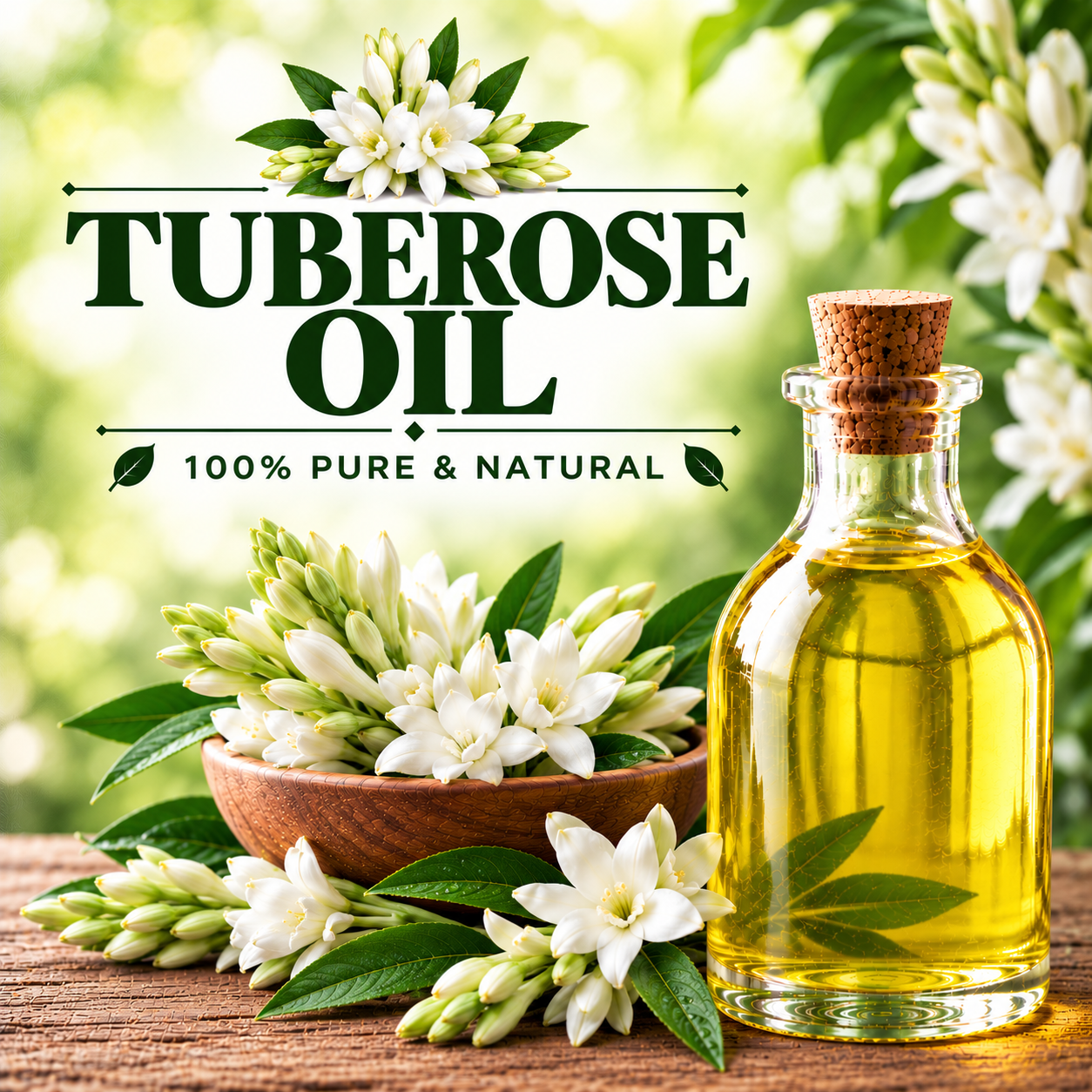
Tuberose Oil
Tuberose Oil is a highly valued floral aromatic ingredient known for its rich, sweet, creamy and distinctive fragrance. It is widely used in perfumery, fragrance products, cosmetics, personal care formulations, soaps and other aromatic applications. Tuberose is especially appreciated for its elegant floral character and ability to add depth and sophistication to fragrance compositions.
What is Tuberose Oil?
Tuberose Oil is an aromatic extract obtained from the flowers of the tuberose plant, botanically known as Polianthes tuberosa and commonly classified today as Agave amica. It is prized for its intense, sweet, floral and slightly creamy aroma.
Depending on the manufacturing process and product specification, commercial tuberose products may be available as an absolute, concrete, extract or other specialized aromatic preparation. Therefore, the exact extraction method and composition should always be checked in the supplier’s technical documentation.
Botanical Information of Tuberose
- Common Name: Tuberose
- Botanical Name: Agave amica (syn. Polianthes tuberosa)
- Family: Asparagaceae
- Plant Part Used: Flowers
- Aroma: Sweet, rich, floral, creamy and exotic
- Colour: Usually pale yellow to yellowish, depending on extraction and specification
- Applications: Perfumery, cosmetics, personal care, soaps and fragrance products
How is Tuberose Oil Extracted?
Tuberose flowers contain delicate aromatic compounds that are sensitive to processing conditions. Commercial tuberose aromatic products are commonly produced using specialized extraction techniques, particularly solvent extraction for obtaining tuberose concrete and absolute.
The exact manufacturing method depends on the desired product type and quality specification. A high-quality product should be accompanied by appropriate technical documents such as COA, TDS and SDS.
Tuberose Oil Uses & Applications
1. Perfumery & Fragrance
Tuberose is highly valued in fine perfumery because of its powerful and distinctive floral aroma. It can be used in floral, oriental and luxury fragrance compositions.
2. Cosmetics
Tuberose aromatic ingredients are used in cosmetic formulations where a sophisticated floral fragrance is desired.
3. Skincare Products
It may be incorporated into creams, lotions, body products and other fragranced skincare formulations, subject to the product’s intended grade and formulation requirements.
4. Hair Care Products
Tuberose fragrance can be used in shampoos, conditioners, hair oils and other personal care products to provide a pleasant floral aroma.
5. Soaps & Bath Products
It is commonly suitable for fragrancing soaps, shower products, bath formulations and other scented personal care products.
6. Candles & Home Fragrance
Tuberose’s strong floral character makes it useful in selected candles, diffusers and other home-fragrance formulations, depending on the product specification.
7. Personal Care Products
Tuberose aromatic ingredients can be used in perfumes, body sprays, creams, lotions and other fragranced personal care products.
Benefits of Tuberose Oil for Formulations
Tuberose Oil is valued by formulators for several characteristics:
- Rich and distinctive floral aroma
- Elegant and luxurious fragrance profile
- Suitable for floral fragrance compositions
- Adds depth to perfume blends
- Useful in premium personal care products
- Compatible with selected cosmetic and fragrance formulations
- Can be combined with other floral, citrus, woody and oriental notes
The actual performance depends on the grade, concentration, extraction method and formulation.
Key Characteristics of Tuberose Oil
| Property | Details |
|---|---|
| Common Name | Tuberose |
| Botanical Name | Agave amica / Polianthes tuberosa |
| Family | Asparagaceae |
| Plant Part | Flowers |
| Product Type | Absolute, concrete or specialized floral extract depending on specification |
| Appearance | Pale yellow to yellowish, depending on grade |
| Aroma | Sweet, rich, floral, creamy and exotic |
| Main Application | Perfumery & fragrance |
| Other Applications | Cosmetics, personal care, soaps, hair care, home fragrance |
Major Aromatic Constituents
The aromatic profile of tuberose is complex and can contain numerous naturally occurring volatile compounds. Depending on the variety, cultivation conditions, extraction method and product specification, compounds associated with tuberose fragrance may include benzyl alcohol, methyl benzoate, benzyl benzoate, methyl anthranilate and other aromatic constituents.
The exact composition can vary significantly between products. For commercial applications, GC-MS analysis and the supplier’s COA should be used to confirm the composition of a specific batch.
Tuberose Oil in Different Industries
Fragrance Industry
Tuberose is an important floral note in fine fragrances, perfumes and premium fragrance compositions.
Cosmetic Industry
It can be used to provide a characteristic floral scent to creams, lotions and other cosmetic products.
Personal Care Industry
Tuberose fragrance is suitable for selected body care, hair care and bathing products.
Soap Industry
It can be used as a floral fragrance ingredient in soaps and cleansing products, subject to formulation compatibility.
Home Fragrance Industry
Tuberose may be used in selected candles, diffusers and other fragranced home products.
Tuberose Oil vs Tuberose Absolute
The terms Tuberose Oil and Tuberose Absolute may be used differently by suppliers.
- Tuberose Absolute: Generally refers to a concentrated aromatic extract obtained through solvent-based extraction.
- Tuberose Oil: Can be used as a broader commercial term, but the exact product type should be confirmed from the technical specification.
- Quality: Colour, aroma, concentration and composition can differ depending on the extraction method and source.
Always check the botanical source, extraction method and technical specification before selecting a product for commercial formulation.
Why Choose High-Quality Tuberose Oil?
For commercial fragrance and cosmetic applications, high-quality material can provide:
- Consistent aromatic profile
- Better formulation performance
- Reliable batch-to-batch quality
- Appropriate technical documentation
- Better traceability
- More predictable fragrance characteristics
Before purchasing, check the COA, TDS, SDS and applicable regulatory documentation.
Storage & Handling
Store Tuberose Oil in a tightly closed container away from direct sunlight, excessive heat and moisture. Keep the container in a cool and dry environment and minimize unnecessary exposure to air.
Follow the storage conditions provided by the supplier for the specific product.
Safety & Handling
Tuberose aromatic products are concentrated fragrance materials and should be handled according to their specific safety documentation.
- Do not apply concentrated material directly to the skin unless the product is specifically intended and approved for such use.
- Follow recommended dilution levels for cosmetic and personal care formulations.
- Avoid contact with eyes.
- Perform appropriate formulation and skin compatibility testing.
- Do not assume every tuberose product is suitable for food or therapeutic applications.
- Use only the appropriate grade for the intended application.
- Refer to the supplier’s SDS and regulatory documentation before commercial use.
Frequently Asked Questions About Tuberose Oil
What is Tuberose Oil?
Tuberose Oil is a floral aromatic ingredient derived from tuberose flowers and is widely valued for its rich, sweet and creamy floral fragrance.
What is the botanical name of Tuberose?
Tuberose is commonly known as Agave amica, with Polianthes tuberosa being a widely used former botanical name.
What does Tuberose Oil smell like?
Tuberose has a strong, sweet, rich, creamy and exotic floral aroma with a characteristic luxurious fragrance profile.
What is Tuberose Oil used for?
It is mainly used in perfumery, fragrance products, cosmetics, personal care, soaps, hair care and selected home-fragrance applications.
Is Tuberose Oil used in perfumes?
Yes. Tuberose is a popular floral fragrance material used in many perfume and fine-fragrance compositions.
Is Tuberose Oil good for cosmetics?
Tuberose aromatic ingredients can be used in cosmetic formulations as fragrance materials, provided the selected grade is suitable for the intended application.
Can Tuberose Oil be used in hair care products?
Yes. Suitable tuberose fragrance materials may be used in shampoos, conditioners, hair oils and other fragranced hair-care products.
Is Tuberose Oil the same as Tuberose Absolute?
Not necessarily. Commercial terminology can vary. Tuberose Absolute generally refers to a solvent-extracted floral material, while “Tuberose Oil” may refer to different product types. Always verify the specification.
How should Tuberose Oil be stored?
It should generally be stored tightly closed in a cool, dry place away from direct sunlight, heat and moisture, following the supplier’s recommended storage conditions.
Can Tuberose Oil be used directly on the skin?
Concentrated aromatic materials should not automatically be applied directly to skin. Always check the product’s intended use, safety documentation and recommended dilution.
What documents should I check before buying Tuberose Oil?
For commercial use, check documents such as COA, TDS, SDS, botanical information, extraction method and applicable regulatory or allergen information.
Conclusion
Tuberose Oil is a premium floral aromatic ingredient known for its distinctive sweet, rich and creamy fragrance. Its applications extend across perfumery, cosmetics, personal care, soaps, hair care and selected home-fragrance products.
For consistent formulation results, it is important to select a product with a clearly defined botanical source, extraction method, quality specification and supporting technical documentation.