
Sage Oil
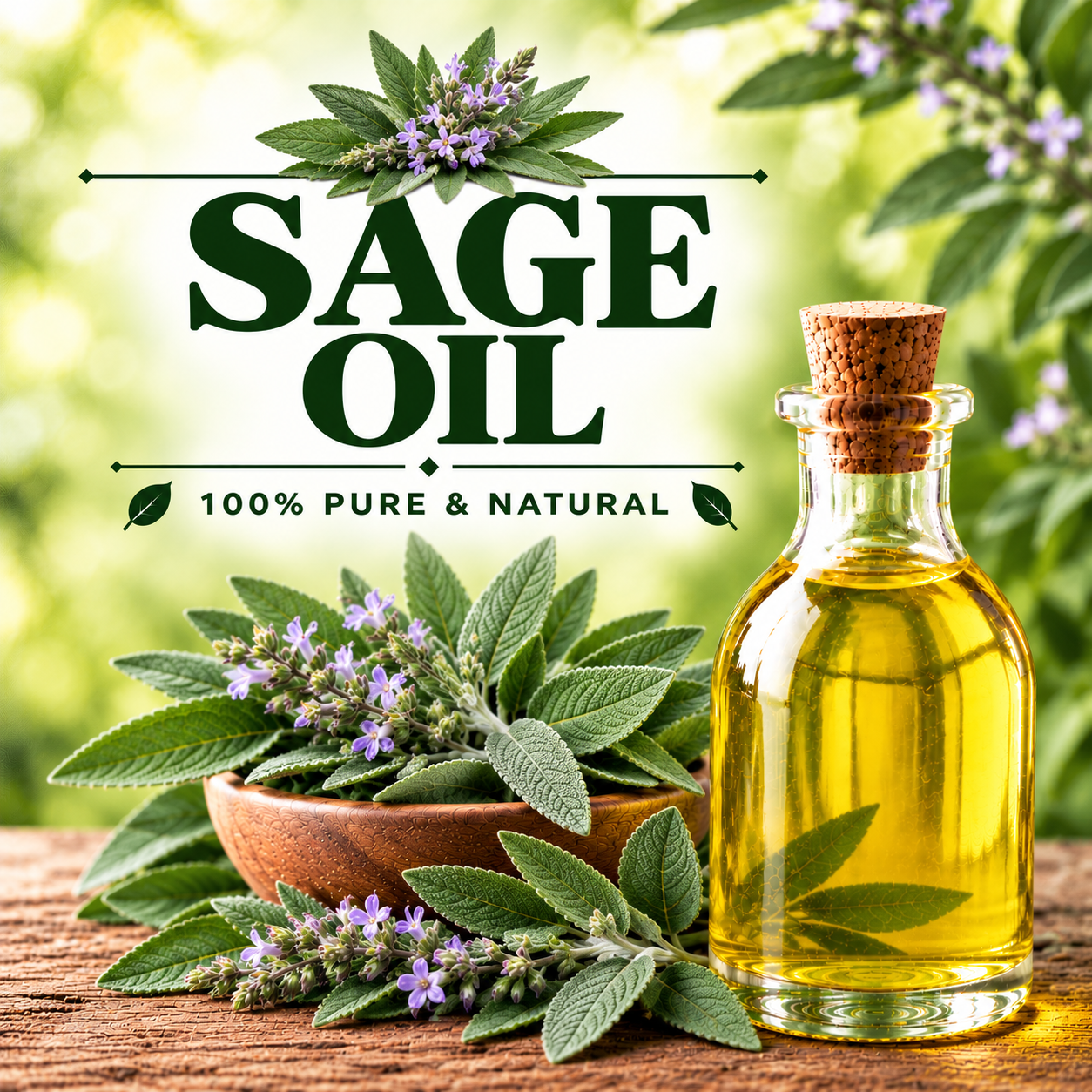
Sage Oil
Sage Oil is a natural aromatic essential oil known for its fresh, herbaceous, earthy and slightly camphoraceous fragrance. It is commonly used in perfumery, cosmetics, personal care, soaps, aromatherapy, fragrance products and selected flavour applications.
Commercial Sage Oil is commonly associated with Salvia officinalis, also known as common sage or garden sage. The oil is valued for its distinctive herbal aroma and is used in formulations where a strong, natural botanical character is desired.
What is Sage Oil?
Sage Oil is an essential oil obtained from the aromatic leaves and aerial parts of the sage plant. A major commercial source is Salvia officinalis, a member of the Lamiaceae family.
It has a characteristic fresh, herbaceous, earthy, slightly woody and camphoraceous aroma. The exact chemical profile can vary according to the plant variety, geographical origin, harvesting conditions and extraction method.
The term “Sage Oil” can sometimes refer to oils from different Salvia species, so the exact botanical source should always be confirmed from the product specification.
Botanical Information of Sage Oil
- Common Name: Sage Oil
- Botanical Source: Commonly Salvia officinalis
- Family: Lamiaceae
- Plant Part: Leaves and aerial parts
- Extraction Method: Commonly steam distillation
- Appearance: Clear to pale yellow/yellowish liquid
- Aroma: Fresh, herbaceous, earthy, woody and camphoraceous
- Product Type: Natural Essential Oil
How is Sage Oil Extracted?
Sage Oil is commonly obtained through steam distillation of sage leaves and aerial plant material.
During steam distillation, steam passes through the prepared plant material and carries the volatile aromatic constituents into a condenser. The vapour is cooled and the essential oil is separated from the condensed water.
The resulting oil can vary in aroma and chemical composition depending on the Salvia species, plant origin, harvesting stage, plant material and distillation conditions.
Sage Oil Uses & Applications
1. Perfumery & Fragrance
Sage Oil is valued in fragrance formulations for its strong fresh, herbal and slightly camphoraceous character.
It can be incorporated into:
- Perfumes
- Colognes
- Herbal fragrance blends
- Botanical perfumes
- Fragrance concentrates
2. Cosmetics & Personal Care
Sage Oil can be used as an aromatic botanical ingredient in selected cosmetic and personal care formulations.
Potential applications include:
- Creams and lotions
- Body care products
- Massage oils
- Botanical cosmetic products
- Natural personal care formulations
3. Soap & Bath Products
Its distinctive herbaceous aroma makes Sage Oil suitable for selected soap, shower and bath formulations.
It may be used in:
- Handmade soaps
- Bath products
- Shower products
- Body washes
- Aromatic bath formulations
4. Hair Care Products
Sage Oil can be incorporated into selected hair care formulations where a fresh herbal fragrance is desired.
Applications may include:
- Hair oils
- Shampoos
- Conditioners
- Botanical hair products
- Scalp-care formulations
5. Aromatherapy
Sage Oil is used in aromatic blends because of its strong herbal and fresh fragrance profile.
It can be included in:
- Essential oil blends
- Diffuser formulations
- Aromatic preparations
- Botanical fragrance blends
6. Home Fragrance
Sage Oil may be used in candles, diffusers, room fragrance products and other aromatic applications.
7. Food & Flavour Applications
Where an appropriate food-grade specification is available, Sage Oil may be used as a concentrated flavouring ingredient in selected food and beverage formulations.
Only a product specifically manufactured and approved for food use should be used in food applications.
Sage Oil Benefits for Formulations
Sage Oil is valued by formulators for its characteristic aromatic properties, including:
- Fresh herbal fragrance
- Strong botanical character
- Earthy and slightly woody notes
- Distinctive camphoraceous profile
- Useful in fragrance blending
- Suitable for soaps and bath products
- Useful in selected cosmetic formulations
- Applicable to selected flavour formulations when food-grade
These points describe the oil’s formulation and aromatic characteristics and should not be interpreted as medical claims.
Key Characteristics of Sage Oil
| Property | Description |
|---|---|
| Common Name | Sage Oil |
| Botanical Source | Commonly Salvia officinalis |
| Family | Lamiaceae |
| Plant Part | Leaves and aerial parts |
| Extraction | Steam distillation |
| Appearance | Clear to pale yellow/yellowish |
| Aroma | Fresh, herbaceous, earthy, woody, camphoraceous |
| Type | Essential Oil |
| Main Applications | Fragrance, cosmetics, personal care, soaps, aromatherapy, flavour |
Major Components of Sage Oil
The chemical composition of Sage Oil depends on the Salvia species, geographical origin, plant material, harvesting conditions and extraction process.
Sage Oil from Salvia officinalis may contain naturally occurring constituents such as:
- α-Thujone
- β-Thujone
- Camphor
- 1,8-Cineole
- Camphene
- Borneol
- α-Pinene
- Other naturally occurring monoterpenes and oxygenated compounds
The exact composition can vary considerably between batches and sources. For commercial applications, the supplier’s COA, TDS and GC-MS report should be checked before formulation.
Sage Oil for Different Industries
Cosmetic Industry
Sage Oil can be used as an aromatic botanical ingredient in selected creams, lotions and personal care formulations.
Personal Care Industry
It can be incorporated into soaps, bath products, shower products, massage oils and other aromatic personal care products.
Perfume Industry
Its fresh, herbaceous and camphoraceous aroma can add a distinctive botanical character to fragrance compositions.
Aromatherapy Industry
Sage Oil can be included in essential oil blends and diffuser formulations according to the intended application.
Food & Flavour Industry
Appropriately specified food-grade Sage Oil may be used as a concentrated flavour ingredient where permitted and suitable.
Sage Oil vs Clary Sage Oil
Sage Oil and Clary Sage Oil are not the same ingredient.
- Sage Oil: Commonly Salvia officinalis; stronger, herbaceous, earthy and more camphoraceous.
- Clary Sage Oil: Salvia sclarea; generally softer, sweeter, herbaceous and slightly floral.
Both belong to the Lamiaceae family, but they come from different Salvia species and have different chemical and aromatic profiles.
Sage Oil vs Rosemary Oil
Sage Oil and Rosemary Oil both have strong herbal aromatic profiles, but they are obtained from different plants.
- Sage Oil: Commonly Salvia officinalis; earthy, herbal and camphoraceous.
- Rosemary Oil: Salvia rosmarinus; fresh, herbaceous, woody and characteristic rosemary-like aroma.
They should not automatically be treated as interchangeable ingredients.
Why Choose High-Quality Sage Oil?
For commercial applications, high-quality Sage Oil should ideally have:
- Clearly identified botanical source
- Consistent aroma and appearance
- Defined technical specifications
- Appropriate packaging
- Batch-wise quality documentation
- COA/TDS/SDS where applicable
- GC-MS analysis when required
- Traceable sourcing
For food, cosmetic or other regulated applications, always use the grade specifically manufactured and approved for the intended purpose.
Storage & Handling of Sage Oil
To maintain product quality:
- Store in a tightly closed container.
- Protect from direct sunlight.
- Keep away from excessive heat.
- Store in a cool and dry environment.
- Minimize unnecessary exposure to air.
- Protect from moisture and contamination.
- Follow the supplier’s SDS and recommended storage conditions.
Safety & Handling
Sage Oil is a concentrated essential oil and requires appropriate handling.
- Do not normally apply concentrated Sage Oil directly to the skin without suitable dilution.
- Avoid contact with eyes and sensitive areas.
- Conduct appropriate compatibility or patch testing for topical formulations.
- Keep away from children and pets.
- Do not ingest unless the product is specifically manufactured, tested and approved for an ingestible application.
- Because Salvia officinalis oil can contain thujone and other potent constituents, use should follow the relevant product specification and applicable safety requirements.
- For food applications, use only an appropriate food-grade product.
- Always review the supplier’s SDS and recommended usage levels.
Frequently Asked Questions About Sage Oil
What is Sage Oil?
Sage Oil is a natural essential oil commonly obtained from the leaves and aerial parts of sage plants, particularly Salvia officinalis.
What is the botanical name of Sage Oil?
A major commercial source of Sage Oil is Salvia officinalis, commonly known as common sage or garden sage.
What family does Sage belong to?
Sage belongs to the Lamiaceae family.
How is Sage Oil extracted?
Sage Oil is commonly extracted through steam distillation of the plant’s aromatic leaves and aerial parts.
What does Sage Oil smell like?
Sage Oil generally has a fresh, herbaceous, earthy and slightly camphoraceous aroma.
What is Sage Oil used for?
Sage Oil is commonly used in perfumes, cosmetics, personal care, soaps, bath products, aromatherapy, home fragrance and selected flavour applications.
Is Sage Oil the same as Clary Sage Oil?
No. Sage Oil is commonly associated with Salvia officinalis, while Clary Sage Oil comes from Salvia sclarea. Their aroma and chemical profiles are different.
Can Sage Oil be used in skincare?
Yes. Sage Oil can be incorporated into suitable cosmetic and skincare formulations at appropriate concentrations and according to the product specification.
Can Sage Oil be used in hair care?
Yes. It can be used as an aromatic botanical ingredient in selected shampoos, hair oils, conditioners and other hair care products.
Is Sage Oil used in perfumes?
Yes. Its strong herbal and camphoraceous character makes it useful in selected fragrance formulations.
Can Sage Oil be used in soap?
Yes. Sage Oil can be used as a fragrance ingredient in soaps, bath products and personal care formulations.
Can Sage Oil be used in food?
Only a specifically manufactured and approved food-grade Sage Oil should be considered for food or flavour applications. Cosmetic or industrial-grade oil should not automatically be considered food grade.
How should Sage Oil be stored?
It should generally be stored in a tightly sealed container in a cool, dry and dark environment away from direct sunlight and excessive heat.
Conclusion
Sage Oil is a distinctive natural essential oil commonly associated with Salvia officinalis and valued for its fresh, herbaceous, earthy and slightly camphoraceous aroma. It has applications across perfumery, cosmetics, personal care, soaps, aromatherapy, home fragrance and selected flavour formulations.
For commercial applications, it is important to verify the botanical source, batch composition, quality documentation and intended grade. Proper technical specifications help support consistent formulation and responsible use.