
-
indianfarmer
- Posted on
- Categories:Blog
- 0 comments
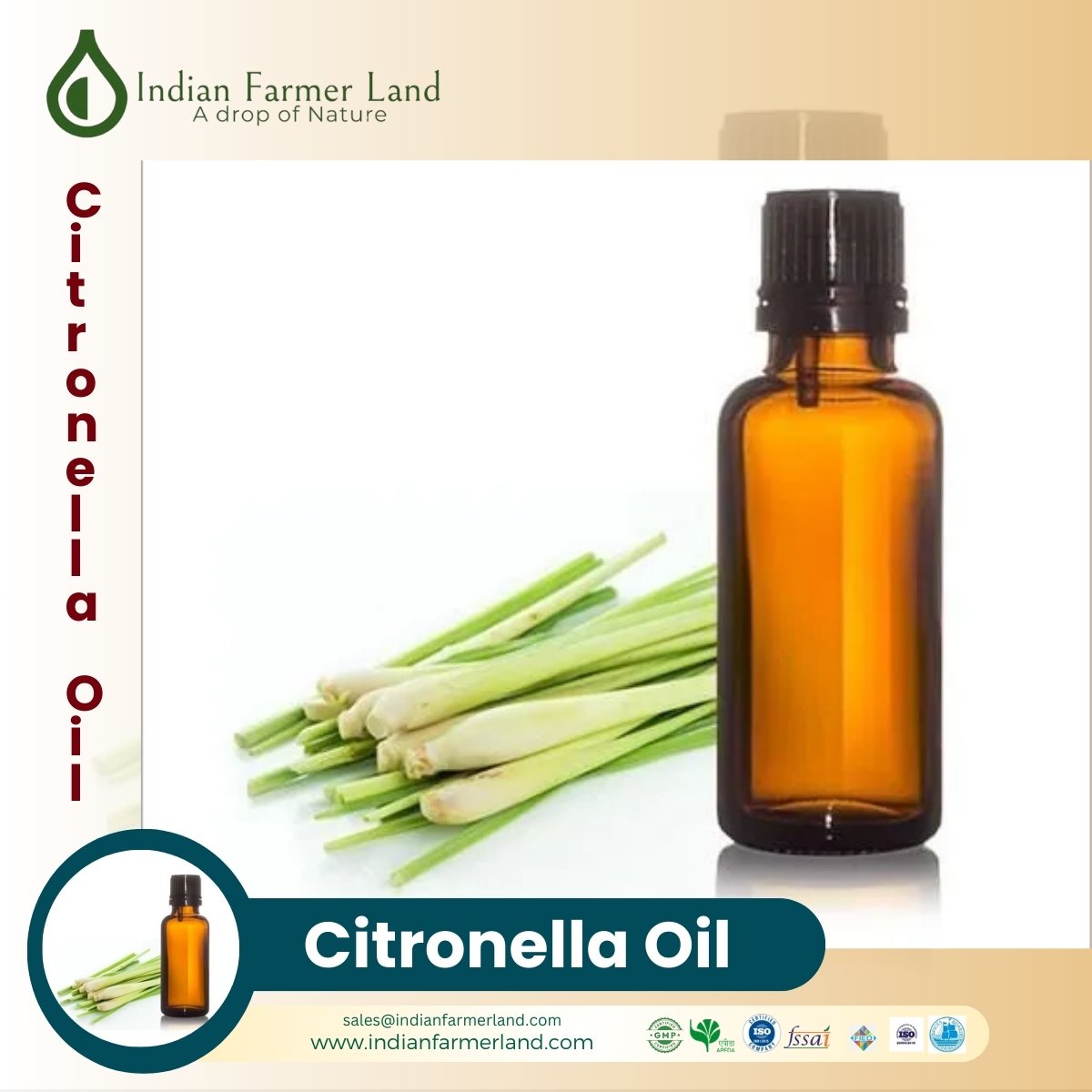
Citronella Oil
Citronella Oil is a natural essential oil obtained from the leaves and stems of citronella grass, primarily from species such as Cymbopogon nardus and Cymbopogon winterianus. Known for its fresh, lemony and characteristic aroma, Citronella Oil is widely used across the fragrance, personal care, cosmetics, household, aromatherapy and industrial industries.
Citronella Oil contains naturally occurring aromatic compounds such as citronellal, citronellol and geraniol, which contribute to its distinctive fragrance profile. The exact composition can vary depending on the citronella species, geographical origin, cultivation conditions, harvesting and distillation process.
What is Citronella Oil?
Citronella Oil is a concentrated essential oil obtained mainly through steam distillation of the fresh or partially dried aerial parts of citronella grass.
Its fresh, citrus-like and slightly floral aroma makes it a popular botanical ingredient in fragrances, soaps, candles, personal-care products, household products, aromatherapy formulations and selected industrial applications.
Citronella Oil is also widely recognized as an ingredient used in products designed to help repel insects.
Common Uses & Applications of Citronella Oil
1. Fragrance & Perfumery
Citronella Oil is widely used in fragrance formulations because of its fresh, lemony and distinctive aroma.
It can be incorporated into perfumes, deodorants, soaps, candles, room fresheners and fragrance blends to provide a refreshing citrus character.
2. Household Products
Citronella Oil is commonly used as an aromatic ingredient in selected household products.
It may be incorporated into floor cleaners, air fresheners, scented products and other household formulations where its characteristic fresh aroma is desired.
3. Insect-Repellent Products
Citronella Oil is widely recognized for its use in insect-repellent products and formulations.
It can be incorporated into appropriately formulated candles, sprays, lotions, diffusers and other products designed to help repel insects.
The effectiveness of a finished product depends on its formulation, concentration, application method and regulatory requirements.
4. Personal Care Products
Citronella Oil can be incorporated into properly formulated personal-care products where its characteristic fragrance is desired.
It may be used in selected soaps, body-care products, bath products and deodorizing formulations.
5. Cosmetics & Skincare
Citronella Oil can be used as a fragrance ingredient in selected cosmetic formulations.
It may be incorporated into creams, lotions, body products and other cosmetic formulations according to appropriate formulation and safety requirements.
6. Aromatherapy & Wellness Products
Citronella Oil is valued for its fresh and uplifting citrus-like aroma and can be used in selected aromatherapy and wellness formulations.
It may be incorporated into diffuser blends, aromatic products and other fragrance-based wellness applications.
7. Soap & Candle Making
Citronella Oil is a popular ingredient for soap and candle formulations because of its strong and recognizable fresh aroma.
It can provide a distinctive citrus-like fragrance to handmade soaps, scented candles and other aromatic products.
Key Characteristics of Citronella Oil
- Botanical Sources: Cymbopogon nardus / Cymbopogon winterianus
- Common Name: Citronella Oil
- Plant Part: Leaves and Stems / Aerial Parts
- Extraction Method: Steam Distillation
- Appearance: Clear to pale yellow liquid
- Aroma: Fresh, lemony, citrus-like and slightly floral
- Major Constituents: Citronellal, Citronellol, Geraniol and other naturally occurring volatile compounds
- Applications: Fragrance, personal care, cosmetics, household products, aromatherapy and insect-repellent formulations
The exact chemical composition of Citronella Oil may vary depending on the botanical species, geographical origin, cultivation conditions, harvesting stage and distillation process.
Why Choose Quality Citronella Oil?
For commercial applications, selecting high-quality Citronella Oil is important for achieving consistent aroma, purity and formulation performance.
When sourcing Citronella Oil, businesses may consider:
- Correct botanical identity
- Citronella species
- Quality and origin of raw material
- Extraction method
- Chemical composition
- Citronellal and citronellol content
- Purity and authenticity
- Aroma and appearance
- Batch-to-batch consistency
- Certificate of Analysis (COA)
- Technical Specification Sheet
- Intended application and regulatory requirements
Reliable technical documentation helps manufacturers select the appropriate grade of Citronella Oil for their specific application.
Citronella Oil for Different Industries
Citronella Oil is widely used across several industries, including:
Fragrance Industry – perfumes, soaps, candles, deodorants and fragrance blends
Personal Care Industry – soaps, bath products and body-care formulations
Cosmetic Industry – creams, lotions and fragrance-based cosmetic products
Household Industry – air fresheners, cleaning products and scented products
Aromatherapy Industry – diffuser blends and aromatic wellness products
Insect-Repellent Industry – candles, sprays, lotions and other repellent formulations
Citronella Oil – A Versatile Natural Citrus Aroma
Citronella Oil is valued for its fresh, lemony and distinctive aroma, making it a versatile natural ingredient for fragrance and personal-care formulations.
Its characteristic aromatic profile makes it particularly useful in soaps, candles, perfumes, household products, aromatherapy formulations and insect-repellent products.
Whether used as a natural fragrance ingredient or incorporated into appropriately formulated insect-repellent products, Citronella Oil provides a recognizable and refreshing aromatic character.
Storage & Handling
Proper storage is important for maintaining the quality and stability of Citronella Oil.
- Store in a tightly closed container.
- Protect from direct sunlight and excessive heat.
- Keep away from moisture and contamination.
- Minimize prolonged exposure to air.
- Use suitable packaging for essential oils.
- Store according to the supplier’s recommended conditions.
- Check the product’s shelf life and batch-specific specifications.
-
Safety & Handling
Citronella Oil is a concentrated essential oil and should be handled appropriately.
- Avoid applying undiluted oil directly to the skin.
- Use appropriate dilution for topical applications.
- Avoid contact with eyes and sensitive areas.
- Conduct a suitable patch test for topical formulations where appropriate.
- Do not consume unless specifically manufactured and approved for food use.
- Keep away from children and pets.
- Follow the supplier’s SDS, COA and technical documentation.
Important: Citronella Oil from different Cymbopogon species can have different chemical profiles and specifications. Always verify the botanical source and product documentation before commercial use.
Conclusion
Citronella Oil is a natural essential oil obtained from citronella grass and recognized for its fresh, lemony, citrus-like and slightly floral aroma.
Its applications across fragrance, cosmetics, personal care, household, aromatherapy and insect-repellent industries make it a valuable botanical ingredient for manufacturers and formulators.
For businesses looking for a reliable natural citrus-aromatic ingredient, selecting authentic, high-quality and application-specific Citronella Oil can help ensure consistent aroma, purity and formulation performance.