
-
indianfarmer
- Posted on
- Categories:Blog
- 0 comments
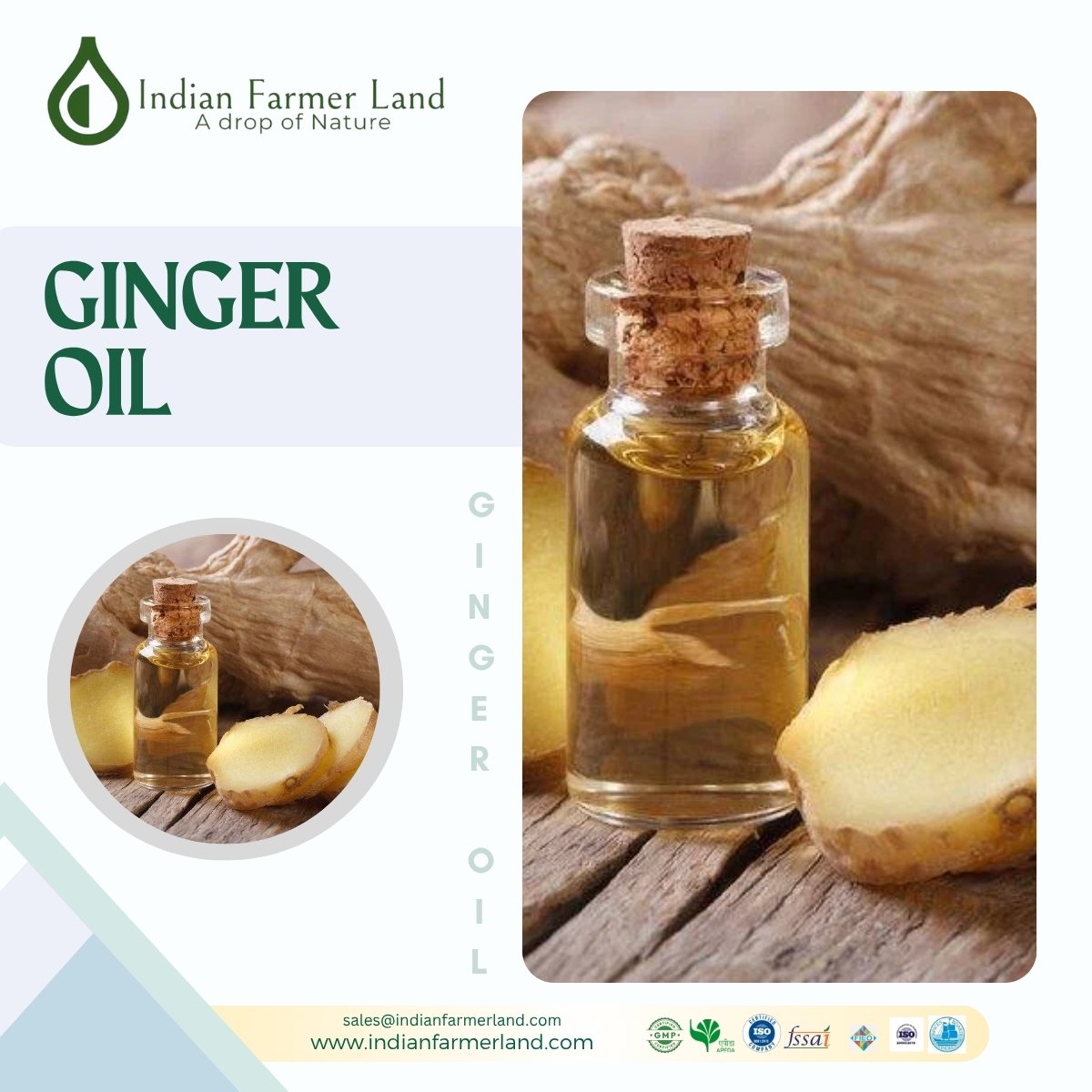
Ginger Oil – Natural Spicy Essential Oil for Versatile Applications
Ginger Oil is a natural essential oil obtained from the rhizomes of the ginger plant, scientifically known as Zingiber officinale. Known for its warm, spicy, fresh and characteristic ginger aroma, Ginger Oil is widely used across the food, flavour, fragrance, pharmaceutical, cosmetics, personal care and wellness industries.
Ginger Oil contains naturally occurring aromatic compounds such as zingiberene, α-zingiberene, β-sesquiphellandrene and other volatile constituents, which contribute to its distinctive aroma and flavour profile. The exact composition may vary depending on the ginger variety, geographical origin, extraction method and processing conditions.
What is Ginger Oil?
Ginger Oil is a concentrated essential oil extracted from the rhizomes of Zingiber officinale. It is commonly obtained through steam distillation and is valued for its warm, spicy, fresh and slightly woody aromatic profile.
Its versatile sensory characteristics make Ginger Oil a popular natural ingredient in flavour formulations, beverages, confectionery, fragrances, cosmetics, personal-care products and selected pharmaceutical and wellness formulations.
Common Uses & Applications of Ginger Oil
1. Food & Flavour Industry
Ginger Oil is widely used as a natural flavouring ingredient because of its characteristic warm and spicy flavour.
It can be incorporated into suitable products such as beverages, confectionery, bakery products, sauces, candies and other flavour formulations, provided the oil meets the required food-grade specifications.
2. Beverage Formulations
Ginger Oil can be used in selected beverage formulations to provide a distinctive warm, spicy and refreshing ginger note.
It may be incorporated into soft drinks, functional beverages, herbal beverages and flavour blends when produced and approved for the intended food application.
3. Pharmaceutical & Herbal Formulations
Ginger Oil is used as an aromatic botanical ingredient in selected pharmaceutical and herbal formulations.
It may be incorporated into appropriately formulated products where its characteristic aroma and flavour are desired.
4. Fragrance & Perfumery
Its warm, spicy and slightly woody aroma makes Ginger Oil suitable for fragrance formulations.
It can be used in perfumes, soaps, candles, deodorants, room fresheners and fragrance blends to add a warm and distinctive aromatic character.
5. Cosmetics & Personal Care
Ginger Oil can be incorporated into properly formulated cosmetic and personal-care products where its characteristic fragrance is desired.
It may be used in selected creams, lotions, body-care products, bath products, soaps and cosmetic formulations.
6. Aromatherapy & Wellness Products
Ginger Oil is valued for its warm and stimulating aromatic profile and can be used in selected aromatherapy and wellness formulations.
It may be incorporated into diffuser blends, massage formulations and other aromatic products according to the intended application and appropriate safety guidelines.
7. Massage & Body Care Products
When properly diluted and formulated, Ginger Oil can be incorporated into massage and body-care products.
Its warm and spicy aroma makes it suitable for aromatic massage blends and selected personal-care formulations.
Key Characteristics of Ginger Oil
- Botanical Name: Zingiber officinale
- Common Name: Ginger Oil
- Plant Part: Rhizomes
- Extraction Method: Steam Distillation
- Appearance: Clear to pale yellow or yellow liquid
- Aroma: Warm, spicy, fresh and characteristic
- Major Constituents: Zingiberene, α-Zingiberene, β-Sesquiphellandrene and other naturally occurring volatile compounds
- Applications: Food, flavour, fragrance, cosmetics, personal care, pharmaceutical and wellness formulations
The exact chemical composition of Ginger Oil may vary depending on the ginger variety, geographical origin, cultivation conditions, rhizome quality, harvesting and extraction process.
Why Choose Quality Ginger Oil?
For commercial applications, selecting high-quality Ginger Oil is important for achieving consistent aroma, flavour, purity and formulation performance.
When sourcing Ginger Oil, businesses may consider:
- Correct botanical identity
- Quality and origin of ginger rhizomes
- Extraction method
- Chemical composition
- Purity and authenticity
- Aroma and appearance
- Batch-to-batch consistency
- Certificate of Analysis (COA)
- Technical Specification Sheet
- Intended application and regulatory requirements
Reliable technical documentation helps manufacturers select the appropriate grade of Ginger Oil for their specific requirements.
Ginger Oil for Different Industries
Ginger Oil is widely used across several industries, including:
Food & Flavour Industry – beverages, confectionery, bakery products, sauces and flavour formulations
Beverage Industry – soft drinks, herbal beverages and flavour blends
Pharmaceutical Industry – selected herbal and aromatic formulations
Fragrance Industry – perfumes, soaps, candles, deodorants and fragrance blends
Cosmetic Industry – creams, lotions, body-care and cosmetic formulations
Personal Care Industry – soaps, bath products and body-care products
Wellness Industry – aromatherapy, massage and aromatic wellness formulations
Ginger Oil – A Versatile Natural Spicy Ingredient
Ginger Oil is valued for its warm, spicy, fresh and characteristic aroma, making it a versatile botanical ingredient for a wide range of commercial formulations.
Its distinctive flavour profile makes it particularly useful in food, beverages and flavour formulations, while its warm aromatic character makes it suitable for fragrance, cosmetics, personal care and wellness products.
Whether used as a natural flavouring ingredient or an aromatic essential oil, Ginger Oil provides a unique and recognizable ginger character to finished products.
Storage & Handling
Proper storage is important for maintaining the quality and stability of Ginger Oil.
- Store in a tightly closed container.
- Protect from direct sunlight and excessive heat.
- Keep away from moisture and contamination.
- Minimize prolonged exposure to air.
- Use suitable packaging for essential oils.
- Follow the recommended storage conditions provided by the supplier.
- Check the product’s shelf life and batch-specific specifications.
-
Safety & Handling
Ginger Oil is a concentrated essential oil and should be handled appropriately.
- Avoid applying undiluted oil directly to the skin.
- Use appropriate dilution for topical applications.
- Avoid contact with eyes and sensitive areas.
- Do not consume unless specifically manufactured and approved for food use.
- Keep away from children and pets.
- Follow the supplier’s SDS, COA and technical documentation.
- For food and pharmaceutical applications, use only the appropriate grade and specification.
Important: Ginger Oil intended for food, pharmaceutical, cosmetic and fragrance applications may have different specifications and regulatory requirements. Always verify the product documentation before commercial use.
Conclusion
Ginger Oil is a natural essential oil obtained from the rhizomes of Zingiber officinale and recognized for its warm, spicy, fresh and characteristic ginger aroma.
Its applications across food, flavour, beverages, fragrance, pharmaceutical, cosmetics, personal care and wellness industries make it a valuable natural ingredient for manufacturers and formulators.
For businesses looking for a reliable natural ginger ingredient, selecting authentic, high-quality and application-specific Ginger Oil can help ensure consistent aroma, flavour and formulation performance.